Introduction
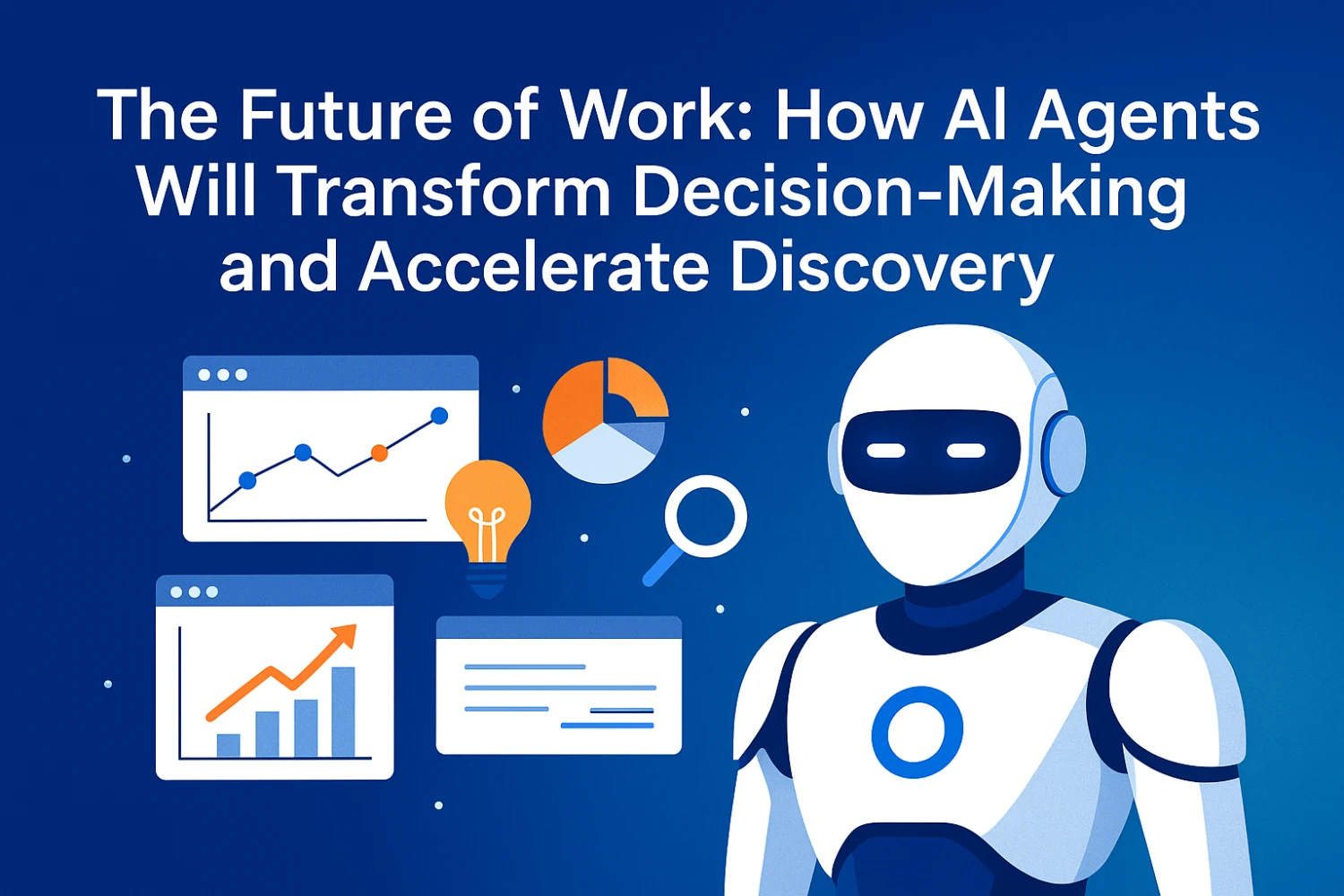
We're standing at the threshold of a fundamental shift in how work gets done. Within the next few years, artificial intelligence agents won't just assist with tasks—they'll increasingly act on our behalf, making decisions, conducting research, and managing complex processes autonomously. This isn't speculative futurism; it's the transformation unfolding right now in laboratories, businesses, and research institutions worldwide.
For business leaders, product designers, and anyone planning organizational strategy, understanding this shift is crucial. The questions aren't just technical—they're deeply human: How should we design systems that understand our preferences? What happens when AI begins making many of our decisions? How do we ensure these agents serve our interests rather than manipulate them?
Beyond individual convenience, AI agents represent something even more transformative: the potential to radically accelerate how we understand human behavior itself. Researchers are already using AI to simulate human responses at massive scale, compressing research cycles that once took months into hours. This acceleration could fundamentally reshape social science, economics, and policy-making—bringing our understanding of society closer to the speed at which society actually changes.
The Rise of AI Agents: From Assistants to Autonomous Decision-Makers
Traditional AI systems respond to commands. Ask a question, get an answer. Request a task, receive results. But AI agents represent a qualitative leap: they pursue goals, make independent decisions, adapt strategies, and operate with meaningful autonomy over extended periods.
What Makes AI Agents Different
The distinction matters for businesses preparing for this transition:
Goal-Oriented Behavior: Rather than simply responding to individual prompts, AI agents work toward objectives you define. Tell an agent to "find the best flight under $600 next week with no red-eyes," and it doesn't just search—it evaluates options across airlines, considers your loyalty programs, weighs trade-offs between price and convenience, and completes the purchase.
Multi-Step Reasoning: Agents break complex requests into subtasks, determining which information they need, which tools to use, and how to sequence actions. They don't follow rigid scripts; they plan dynamically based on context and intermediate results.
Memory and Continuity: Modern agents remember past interactions, learn your preferences, and build understanding over time. They don't treat each request as isolated but maintain context across conversations and decisions.
Autonomous Action: Most significantly, agents can execute decisions without requiring human approval at every step. With appropriate guardrails, they complete transactions, coordinate schedules, allocate resources, and manage workflows independently.
The Agent Economy: Where This Is Heading
Industry analysts project that within 2-3 years, AI agents will handle substantial portions of:
- Personal commerce: Booking travel, comparing products, negotiating prices, managing subscriptions
- Business operations: Scheduling resources, approving routine expenses, onboarding clients, coordinating logistics
- Customer service: Resolving complex issues across multiple systems without human escalation
- Research and analysis: Gathering information, synthesizing insights, generating hypotheses
For businesses, this means competitive advantage will increasingly depend on how effectively you deploy, manage, and govern AI agents—both internally and in customer-facing applications.
Designing Agents That Understand What You Actually Want
The most critical challenge in agent design isn't technical capability—it's alignment. How do you create agents that genuinely understand and serve user preferences rather than gaming metrics or pursuing objectives misaligned with real human interests?
The Preference Problem
Consider an apparently simple request: "Find me a good restaurant for dinner tonight." What makes a restaurant "good"? The answer depends on:
- Context: Are you celebrating an anniversary or grabbing a quick meal?
- Preferences: Do you prioritize innovative cuisine, value, ambiance, or convenience?
- Constraints: Budget, dietary restrictions, location, reservation availability
- Unspoken factors: Your typical dining patterns, recent food choices, social context
Human preferences are nuanced, contextual, often contradictory, and sometimes unclear even to ourselves. Teaching AI agents to navigate this complexity requires sophisticated approaches to preference elicitation and learning.
Three Approaches to Understanding Users
Explicit Preference Specification: Users define parameters upfront—budget ranges, required features, deal-breakers. This works for well-defined domains but becomes cumbersome for complex decisions.
Behavioral Learning: Agents observe past decisions, identify patterns, and infer preferences. More natural than explicit specification but risks perpetuating existing biases or missing context that explains exceptions.
Interactive Refinement: Agents make initial suggestions, users provide feedback, and systems iteratively improve understanding. This conversational approach balances user burden with personalization quality.
The most effective agent systems combine all three, adapting their approach based on decision importance, user familiarity, and available data.
Building Trust Through Transparency
For agents handling consequential decisions, transparency isn't optional—it's essential for adoption. Users need to understand:
- What information the agent used to make decisions
- Which alternatives were considered and why they were rejected
- What trade-offs were made between competing objectives
- When uncertainty is high and human judgment might improve outcomes
Leading implementations provide audit trails showing agent reasoning, decision points, and information sources. This transparency builds trust while enabling users to identify and correct misalignments before they cause problems.
How Agents Will Shape Markets and Institutions
When millions of AI agents begin making purchasing decisions, coordinating logistics, and managing resources on behalf of humans, the impacts extend far beyond individual convenience. Markets, pricing mechanisms, and institutional structures will evolve in response.
Agent-Driven Commerce: Opportunities and Risks
Price Discovery and Negotiation: When agents comparison-shop across thousands of vendors and negotiate prices automatically, markets become more efficient—but also potentially more volatile. Sophisticated agents might coordinate implicitly, creating emergent behaviors that stabilize or destabilize pricing.
Personalized Markets: Agents that deeply understand individual preferences enable mass customization at scale. Products, services, and pricing could adapt to individual users in real-time, creating unprecedented personalization—or concerning discrimination if poorly designed.
Intermediary Disruption: Industries built on information asymmetry face existential pressure. When agents provide perfect information transparency and negotiation capabilities, traditional intermediaries must justify their value through genuine expertise and service quality.
New Forms of Competition: Businesses will compete not just for consumer attention but for agent trust and integration. The companies whose services work seamlessly with popular AI agents gain structural advantages.
Governance Challenges for Agent Economies
Policymakers and business leaders face novel questions:
- Accountability: When an agent makes a bad decision, who's responsible—the user, the agent provider, or someone else?
- Market manipulation: How do we detect and prevent agents from colluding, even inadvertently, in ways that harm consumers?
- Fairness: What standards ensure agents don't discriminate or create systematic disadvantages for specific groups?
- Privacy: As agents accumulate detailed behavioral data, how do we protect user information while enabling personalization?
Organizations deploying agents need robust governance frameworks addressing these challenges before they create legal or reputational risks.
Accelerating Social Science: AI Agents as Research Tools
Beyond their commercial applications, AI agents are enabling a profound acceleration in how we understand human behavior. This might be their most transformative impact of all.
The Traditional Research Bottleneck
Social science research—psychology, economics, sociology, political science—has always been constrained by a fundamental limitation: studying human behavior requires actual humans. Running experiments means recruiting participants, scheduling sessions, collecting responses, and analyzing results. A single study might take months and cost tens of thousands of dollars.
This creates painful trade-offs:
- Limited sample sizes: Financial constraints mean studies with 100-500 participants, raising questions about generalizability
- Slow iteration: Testing a hypothesis variation requires recruiting entirely new participants for a new study
- Difficult scenarios: Studying rare events, dangerous situations, or ethically complex scenarios is often impossible
- Geographic constraints: Most research uses convenient populations (college students) rather than representative samples
The AI Simulation Revolution
Recent breakthroughs demonstrate that AI agents can simulate human responses with remarkable accuracy. Researchers have created agent architectures that:
Replicate Individual Behavior: By combining detailed interviews with large language models, agents simulate specific real people with 85% accuracy—matching how consistently individuals replicate their own answers across surveys taken two weeks apart.
Predict Experimental Outcomes: AI agents successfully replicated results from four out of five classic social science experiments, from economic games to behavioral interventions, with effect sizes highly correlated to human participants.
Reduce Bias: Interview-based agents show less demographic bias than traditional simulation methods, more accurately representing diverse populations across race, gender, and political ideology.
Enable Massive Scale: Simulations with thousands or tens of thousands of agents become feasible, allowing researchers to study emergent social phenomena, test policy interventions, and explore complex dynamics impossible to observe in traditional human studies.
What This Enables: Research at the Speed of Thought
The implications for social science are profound:
Rapid Prototyping: Researchers can test experimental designs with thousands of simulated participants in hours, identifying promising directions before investing in costly human studies. Survey questions, intervention strategies, and research frameworks get refined through massive iteration.
Hypothesis Generation: AI agents don't replace human insight—they amplify it. By running millions of behavioral simulations, researchers identify patterns, relationships, and unexpected interactions that generate novel hypotheses for human validation.
Policy Testing: Before implementing major policy changes affecting millions of people, policymakers could simulate impacts across diverse populations, identifying unintended consequences and optimization opportunities. Universal basic income experiments, tax policy changes, or public health interventions get tested virtually before real-world deployment.
Longitudinal Studies Compressed: Research tracking behavioral changes over months or years could be simulated in days, enabling faster understanding of how interventions affect long-term outcomes.
Dangerous or Unethical Scenarios: Questions too risky or ethically problematic to study with real humans become explorable with simulated agents, advancing knowledge in areas previously inaccessible to research.
The Critical Caveat: Simulation Is Not Reality
While AI agents show impressive accuracy in replicating known human behaviors, they're not perfect substitutes for real people. Critical limitations include:
Training Data Bias: Models reflect patterns in their training data, potentially missing or misrepresenting underrepresented populations and perspectives.
Generalization Challenges: Agents validated on specific populations or scenarios may not accurately predict behavior in novel contexts or emerging situations.
Missing Context: Human behavior is shaped by physical embodiment, social pressure, emotional states, and contextual factors that simulations might not fully capture.
Alienness: AI reasoning sometimes differs fundamentally from human cognition, potentially producing correct outputs through incorrect processes.
The consensus among researchers: AI agents are powerful tools for generating hypotheses, prototyping experiments, and exploring possibilities—but validation with real human participants remains essential for conclusions affecting policy and practice.
The Timeline: When This Future Arrives
This transformation isn't decades away—it's unfolding right now across different domains at different speeds:
Already Here (2025):
- AI agents booking travel and making purchases with user supervision
- Customer service agents resolving complex issues autonomously
- Research teams using AI to prototype experiments before human studies
- Businesses deploying agents for routine approvals and logistics coordination
Near-Term (2026-2027):
- Widespread agent-driven commerce for routine purchases and services
- Major e-commerce platforms integrating agent-based shopping as default experience
- Social science research routinely using AI simulations for hypothesis generation
- Corporate operations increasingly managed by autonomous agent systems
Medium-Term (2028-2030):
- Agent-to-agent transactions becoming common without human involvement
- Policy decisions informed by large-scale behavioral simulations
- Market structures adapting to agent-driven dynamics
- Governance frameworks and regulations catching up with technological reality
For businesses, the strategic imperative is clear: understanding and preparing for agent-driven operations isn't premature—it's urgent. Companies that design products, services, and workflows with AI agents in mind will have structural advantages over those treating agents as afterthoughts.
From Research to Implementation: How True Value Infosoft Delivers Agent-Powered Solutions
The emergence of AI agents creates immediate opportunities for businesses across industries—from automating complex workflows to creating intelligent customer experiences to enabling data-driven decision-making at scale. Success requires more than just adopting the latest AI tools; it demands thoughtful architecture, careful governance, and strategic integration.
Our AI Agent Development Expertise
At True Value Infosoft (TVI), we help organizations harness AI agents to achieve operational excellence, competitive advantage, and transformative customer experiences:
Custom AI Agent Development: We build purpose-designed agents for your specific business needs—whether that's automating customer service workflows, managing supply chain logistics, coordinating internal operations, or enabling personalized user experiences. Our agents combine sophisticated reasoning with appropriate guardrails, ensuring they make good decisions while respecting boundaries.
Preference Learning Systems: We develop AI systems that genuinely understand user preferences through behavioral analysis, explicit feedback, and interactive refinement. Whether you're building consumer-facing products or internal tools, our preference learning architectures ensure agents align with real human interests rather than gaming simple metrics.
Agent Integration and Orchestration: Modern businesses need agents that work together and integrate seamlessly with existing systems. We architect multi-agent solutions where specialized agents collaborate on complex workflows, share information appropriately, and coordinate decisions while maintaining clear accountability.
Governance and Oversight Frameworks: Deploying autonomous agents requires robust governance. We implement transparency mechanisms, audit trails, human oversight protocols, and safety guardrails ensuring your agents operate ethically and within regulatory requirements. Our frameworks balance agent autonomy with appropriate human control.
Behavioral Simulation for Research: For organizations conducting market research, testing policy interventions, or exploring customer behavior, we build AI simulation platforms that model human responses at scale. These systems accelerate hypothesis generation, experiment prototyping, and strategic exploration while maintaining scientific rigor.
Agent-Ready Product Design: As agent-driven commerce becomes standard, products and services must work seamlessly with AI agents acting on behalf of users. We help businesses design APIs, interaction patterns, and integration capabilities ensuring your offerings succeed in agent-mediated markets.
Strategic Agent Consulting
Beyond technical implementation, we provide strategic guidance on navigating the agent-powered future:
- Agent readiness assessment: Evaluating where AI agents can deliver maximum value in your organization
- Market strategy for agent economies: Positioning your products and services for agent-driven commerce
- Governance framework development: Creating policies, oversight mechanisms, and accountability structures for agent deployment
- Risk identification and mitigation: Anticipating challenges around privacy, fairness, transparency, and regulatory compliance
- Organizational change management: Preparing teams to work effectively alongside autonomous AI agents
End-to-End Agent Solutions
From initial concept through deployment and continuous improvement, TVI provides comprehensive support:
- Discovery and requirements analysis: Understanding your business objectives and agent opportunities
- Architecture design: Creating agent systems that scale, integrate, and evolve with your needs
- Development and training: Building agents with appropriate capabilities, knowledge, and constraints
- Testing and validation: Ensuring agents perform reliably across diverse scenarios and edge cases
- Deployment and monitoring: Launching agents with real-time oversight and performance tracking
- Continuous improvement: Refining agent behavior based on outcomes, feedback, and changing requirements
The future of work is increasingly agent-mediated—with AI systems making decisions, conducting research, and managing processes on our behalf. Organizations that thoughtfully deploy these capabilities gain operational efficiency, better customer experiences, and competitive differentiation.
Ready to Build Your Agent-Powered Future?
AI agents aren't coming—they're here. The businesses succeeding over the next decade will be those that strategically deploy autonomous systems to amplify human capabilities, automate complex workflows, and create experiences impossible with traditional software.
Whether you're looking to transform customer service through intelligent agents, automate internal operations, enable new forms of personalized commerce, or leverage behavioral simulation for strategic insights, the technology exists today. What matters is thoughtful implementation with appropriate governance, transparency, and user alignment.
At True Value Infosoft, we help organizations navigate this transformation through custom agent development, strategic consulting, and end-to-end implementation support. Our team combines deep AI expertise with practical business understanding to deliver agent solutions that work in real-world operational environments.
Let's explore how AI agents can transform your business operations and customer experiences. Connect with True Value Infosoft to discuss how we can design, build, and deploy intelligent agent systems tailored to your specific needs and objectives.
The future of work is autonomous, intelligent, and increasingly agent-driven. The question is whether your organization will lead this transformation or struggle to catch up.
FAQs
AI assistants respond to direct commands and requests, providing information or completing specific tasks as instructed. AI agents are autonomous systems that pursue goals over time, make independent decisions, adapt strategies based on outcomes, and coordinate multiple actions without requiring human approval at each step. Agents have memory, reasoning capabilities, and the ability to use tools and access information to achieve objectives, while assistants primarily execute predefined functions.
Effective preference learning combines explicit user input (stating requirements), behavioral analysis (observing past decisions), and interactive refinement (iterating through feedback). Critical safeguards include transparency showing how preferences are inferred, user control over learned preferences with ability to correct misunderstandings, regular preference validation rather than assuming stability over time, and explicit boundaries preventing agents from exploiting psychological biases. Well-designed agents optimize for genuine user satisfaction, not engagement metrics that might encourage manipulation.
Current AI agents can replicate human responses with approximately 85% accuracy—matching how consistently individuals replicate their own answers across surveys two weeks apart. Agents successfully reproduce experimental results from classic social science studies, predict personality traits comparably to human judges, and show less demographic bias than traditional simulation methods. However, they're not perfect substitutes for real humans. AI simulations are best used for hypothesis generation, experiment prototyping, and exploring possibilities, with validation using real human participants remaining essential for definitive conclusions.
Robust agent governance includes: clear accountability frameworks specifying responsibility when agents make mistakes, transparency mechanisms showing agent reasoning and decision-making processes, human oversight protocols for high-stakes decisions with appropriate escalation paths, privacy safeguards protecting user data while enabling personalization, fairness auditing to identify and mitigate discriminatory patterns, security controls preventing agent manipulation or misuse, and regular performance monitoring with outcome tracking. Organizations should establish these frameworks before deployment, not after problems emerge.
Businesses should ensure products and services work seamlessly with AI agents through well-designed APIs enabling agent access, clear product information and specifications in machine-readable formats, transparent pricing and availability data, integration with common agent platforms and protocols, and policies addressing agent-mediated transactions. Additionally, consider how your value proposition translates when agents make purchasing decisions—competing on factors like reliability, integration quality, and genuine value rather than just marketing appeal to human psychology.