Introduction
The robotics industry is entering a new phase where machines are no longer working separately from humans—they are working alongside them.
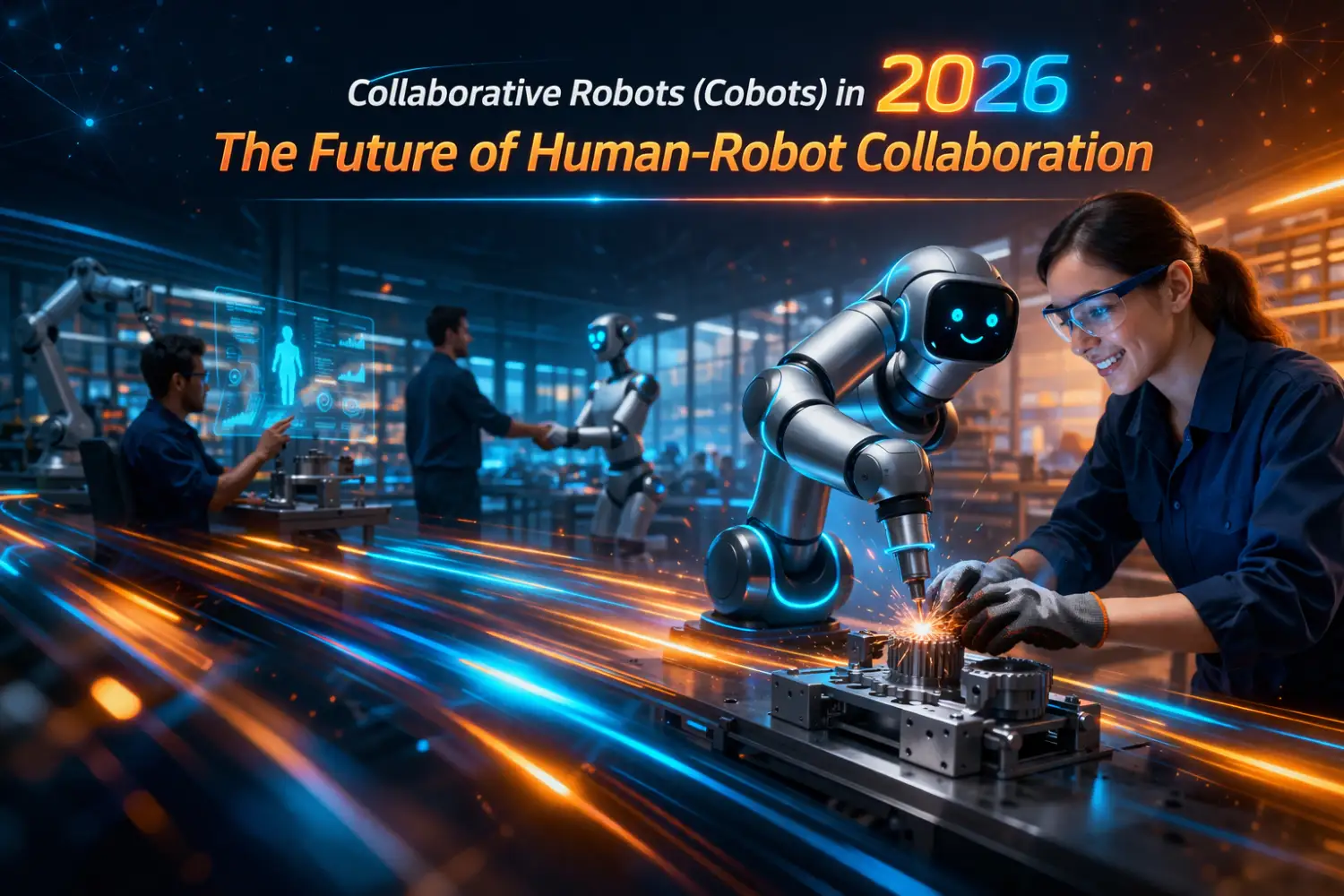
In 2026, collaborative robots (cobots) are becoming one of the most important innovations in automation. Unlike traditional industrial robots that operate in isolated environments, cobots are designed to safely interact with humans in shared workspaces.
This shift is transforming industries by combining human intelligence with robotic precision, creating a powerful partnership that improves productivity and efficiency.
At True Value Infosoft, we see a growing demand for intelligent automation solutions where humans and robots collaborate seamlessly.
What Are Collaborative Robots (Cobots)?
Collaborative robots, or cobots, are robotic systems specifically designed to work safely alongside humans.
They are equipped with:
- Advanced sensors
- AI-powered control systems
- Safety mechanisms to avoid collisions
- Easy-to-program interfaces
Unlike traditional robots, cobots do not require safety cages or isolation zones.
They can assist human workers directly, making them ideal for modern workplaces.
Why Cobots Are Trending in 2026
Cobots are gaining popularity because they solve key challenges faced by industries.
Labor Shortages
Many industries face workforce shortages. Cobots help fill these gaps by assisting human workers.
Need for Flexible Automation
Traditional robots are difficult to reprogram. Cobots can adapt to different tasks quickly.
Cost Efficiency
Cobots are more affordable compared to large industrial robots, making them accessible for small and medium businesses.
Improved Workplace Safety
Cobots reduce the risk of injuries by handling dangerous or repetitive tasks.
Key Applications of Cobots
Manufacturing
Cobots are widely used in manufacturing for:
- Assembly tasks
- Packaging
- Quality inspection
They improve efficiency while maintaining consistency.
Warehousing and Logistics
In logistics, cobots assist with:
- Picking and packing
- Inventory management
- Material handling
This speeds up operations and reduces manual effort.
Healthcare
In healthcare, cobots support:
- Patient assistance
- Laboratory automation
- Rehabilitation therapy
They help medical professionals perform tasks more efficiently.
Electronics and Precision Work
Cobots are ideal for delicate tasks such as:
- Small component assembly
- Circuit board manufacturing
- Precision testing
Benefits of Collaborative Robots
Businesses adopting cobots are experiencing several advantages:
Enhanced Productivity
Cobots handle repetitive tasks, allowing workers to focus on higher-value work.
Improved Safety
Built-in sensors and safety features minimize workplace accidents.
Flexibility
Cobots can be reprogrammed easily for different tasks.
Cost Savings
Lower operational costs compared to traditional automation systems.
Faster Deployment
Cobots can be implemented quickly without major infrastructure changes.
Challenges of Implementing Cobots
While cobots offer many benefits, businesses must address certain challenges:
Integration with Existing Systems
Cobots must work seamlessly with current workflows and machinery.
Training Employees
Workers need training to interact effectively with robotic systems.
Initial Investment
Although cost-effective, cobots still require upfront investment.
Security Concerns
Connected robotic systems must be protected from cyber threats.
How Businesses Can Implement Cobots
To successfully deploy cobots, companies should follow these steps:
Step 1: Identify Suitable Tasks
Focus on repetitive, dangerous, or time-consuming tasks.
Step 2: Choose the Right Cobot
Select a cobot based on payload, precision, and application requirements.
Step 3: Integrate with Workflows
Ensure smooth integration with existing systems and processes.
Step 4: Train Employees
Provide training for employees to work effectively with cobots.
Step 5: Monitor and Optimize
Continuously track performance and optimize operations.
Role of True Value Infosoft in Robotics Solutions
At True Value Infosoft, we help businesses implement intelligent automation systems, including collaborative robotics.
Our expertise includes:
- AI-powered automation
- IoT-enabled robotics solutions
- System integration and optimization
- Custom software for robotics control
We focus on delivering scalable, efficient, and future-ready solutions.
The Future of Human-Robot Collaboration
The future of cobots is incredibly promising.
We can expect:
- AI-powered collaborative robots with advanced learning capabilities
- Increased adoption across small and medium enterprises
- Seamless integration with smart factories
- Human-robot teams working in harmony
Cobots are not replacing humans—they are enhancing human capabilities.
Conclusion
Collaborative robots are redefining how humans and machines work together.
By combining human creativity with robotic precision, cobots are helping businesses improve productivity, reduce costs, and create safer work environments.
As automation continues to evolve, cobots will play a key role in shaping the future of industries.
If your business is looking to adopt intelligent automation, True Value Infosoft can help you build and implement cutting-edge robotics solutions.