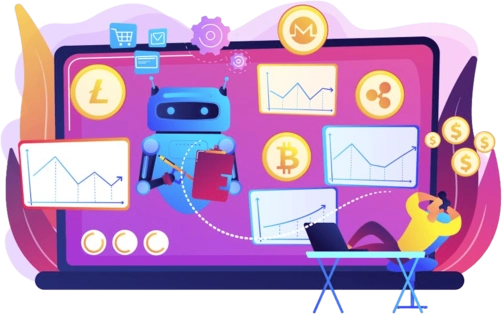
Secure. Scalable. Built for the Future of Finance.
In the digital age, exchange software has become a critical component of financial ecosystems, facilitating seamless transactions across various asset classes, including cryptocurrencies, stocks, and fiat currencies. These platforms serve as intermediaries that enable buyers and sellers to trade securely and efficiently.
Exchange software comes in various forms, including centralized exchanges (CEXs), decentralized exchanges (DEXs), and hybrid models, each offering unique advantages and challenges. With features such as real-time market data, secure wallet integrations, and regulatory compliance tools, modern exchange platforms have revolutionized the way assets are traded globally.
Security remains a paramount concern, as exchange platforms are prime targets for cyber threats. Implementing robust security measures, such as encryption, multi-signature wallets, and KYC/AML compliance, ensures the safety of users and their assets.
Let's Get StartedFill in the details below — our team will reach out shortly.
Exchange software is a digital platform that facilitates the buying, selling, and trading of various assets such as cryptocurrencies, stocks, and fiat currencies. It ensures liquidity and allows users to exchange assets securely through a centralized or decentralized infrastructure.
These platforms support various order types, market-making functionalities, and secure transaction mechanisms to provide a seamless trading experience for individual investors and financial institutions alike.
Secure Asset Trading Platform
Exchange platforms vary based on their operational model and the assets they support. The major types include:
Centralized Exchanges (CEXs)
Platforms operated by a centralized entity that controls user funds and trading mechanisms. Examples include Binance, Coinbase, and Kraken.
Decentralized Exchanges (DEXs)
Peer-to-peer platforms that operate on blockchain technology, eliminating the need for intermediaries. Examples include Uniswap and PancakeSwap.
Hybrid Exchanges
A combination of CEX and DEX, offering the efficiency of centralized platforms with the security and privacy of decentralized models.
Fiat-to-Crypto Exchanges
Platforms that enable users to exchange fiat currencies (USD, EUR, etc.) for cryptocurrencies.
Crypto-to-Crypto Exchanges
Platforms that allow direct trading between cryptocurrencies without involving fiat transactions.
Stock Exchanges
Traditional trading platforms that enable the buying and selling of stocks and securities.
To function efficiently and securely, exchange software must incorporate a range of essential features.
User Interface (UI/UX)
Intuitive dashboard, responsive design for web and mobile, and advanced charting tools for technical analysis.
Trading Engine
Order matching system supporting market, limit, and stop orders with high-speed trade execution.
Wallet Integration
Multi-currency wallet support with hot and cold wallet configurations for secure asset storage.
Security Measures
Two-factor authentication (2FA), multi-signature wallets, anti-phishing measures, and full KYC/AML compliance.
Liquidity Management
Order book management, API integration with liquidity providers, and automated market-making features.
Admin Dashboard
User management tools, real-time monitoring and analytics, and risk management controls.
Payment Gateway Integration
Support for credit/debit cards, bank transfer options, and crypto payment support.
Customer Support
Live chat and ticketing system, FAQs and knowledge base, and multilingual support.
Security is a primary concern when developing exchange software. Given the rise in cyber threats, ensuring strong security protocols is paramount.
Common Security Threats
Best Security Practices
Developing a secure and scalable exchange platform involves multiple stages, from ideation to deployment.
Market Research and Planning
Identifying the target audience, analyzing competitors, and determining the exchange type (CEX, DEX, hybrid).
UI/UX Design
Wireframing and prototyping, designing an intuitive user interface, and enhancing user experience with smooth navigation.
Backend and Frontend Development
Choosing the right technology stack, implementing order-matching and liquidity mechanisms, and integrating APIs for real-time price tracking.
Security Implementation
Encrypting sensitive user data, setting up multi-layered authentication, and conducting penetration testing.
Testing and Deployment
Performing load testing and bug fixes, deploying on secure cloud services, and launching beta testing before public release.
Post-Deployment Maintenance
Regular software updates, security patches, and ongoing customer support and troubleshooting.
As technology continues to evolve, exchange platforms must adapt to stay competitive. Some emerging trends include:
Artificial Intelligence (AI) and Machine Learning
AI-driven trade recommendations, fraud detection, and intelligent risk management for smarter trading decisions.
Blockchain Integration
More secure, transparent, and decentralized exchanges powered by smart contract-based automation.
DeFi and Yield Farming
Decentralized finance (DeFi) features integrated into exchange platforms with passive income through staking and liquidity pools.
Quantum-Resistant Cryptography
Developing advanced security measures to combat future quantum computing threats to digital assets.
Regulatory Compliance Enhancements
Adapting to evolving global regulatory frameworks and enhancing transparency and reporting mechanisms.
Exchange software is a digital platform that facilitates the trading of assets such as cryptocurrencies, stocks, and commodities. It provides users with features like order matching, liquidity management, and secure transactions.
A reliable exchange software should include:
Security measures include encryption, two-factor authentication (2FA), cold wallet storage, anti-DDoS protection, and Know Your Customer (KYC) & Anti-Money Laundering (AML) protocols to prevent fraud and hacking attempts.
Yes, modern exchange software supports multiple cryptocurrencies, allowing users to trade Bitcoin, Ethereum, and other altcoins, along with fiat currency integrations for smooth transactions.
True Value Infosoft provides robust, secure, and scalable exchange solutions with cutting-edge technology, high-speed transactions, and regulatory compliance, ensuring seamless user experience and business growth.
Stop worrying about technology problems. Focus on your business.
Let us provide the expert IT support you deserve.