Introduction
Chronic diseases such as diabetes, heart disease, cancer, and respiratory disorders are among the leading causes of death worldwide. Managing these conditions requires continuous monitoring, timely intervention, and personalized care — something traditional healthcare systems often struggle to deliver at scale.
In 2026, Artificial Intelligence (AI) is transforming chronic disease management by enabling smarter, faster, and more personalized healthcare solutions.
At True Value Infosoft, we help healthcare organizations leverage AI-powered technologies to improve patient outcomes, reduce costs, and enhance operational efficiency.
Let’s explore how AI is revolutionizing chronic disease management, its key benefits, real-world use cases, and how to implement it effectively.
What Is AI in Chronic Disease Management?
AI in chronic disease management refers to the use of advanced technologies such as:
- Machine Learning (ML)
- Predictive Analytics
- Natural Language Processing (NLP)
- AI-powered monitoring systems
These technologies analyze large volumes of patient data to:
- Predict disease progression
- Recommend personalized treatments
- Monitor patient health in real time
- Improve clinical decision-making
AI enables a shift from reactive healthcare to proactive and preventive care.
Key Use Cases of AI in Chronic Disease Management
1. Predictive Health Analytics
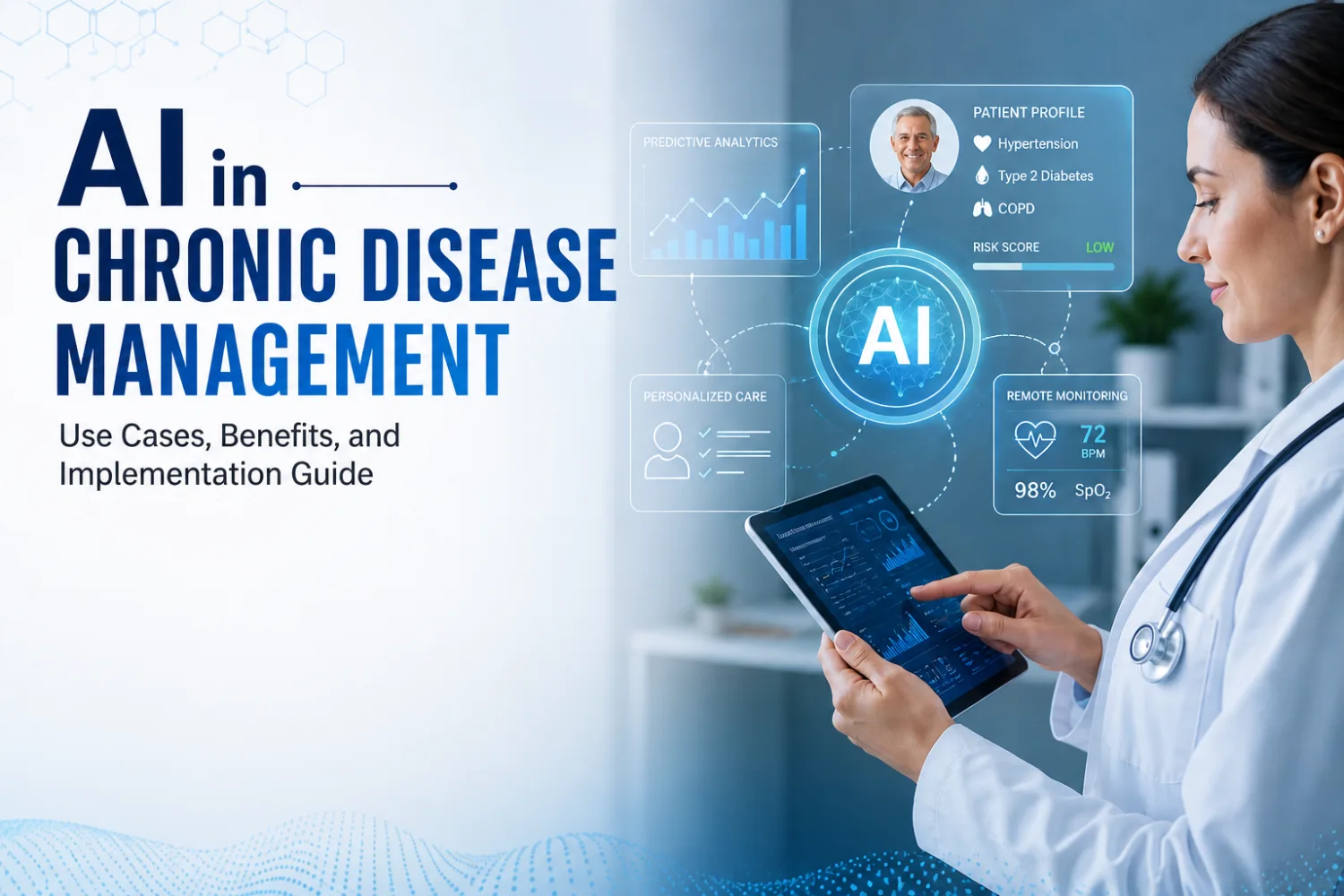
AI systems can analyze patient history, lifestyle data, and medical records to predict the likelihood of disease progression or complications.
For example:
- Predicting heart attack risks
- Identifying early signs of diabetes complications
- Forecasting hospital readmissions
This allows healthcare providers to take preventive action before conditions worsen.
2. Remote Patient Monitoring
AI-powered wearable devices and IoT sensors track patient health in real time.
These systems monitor:
- Blood glucose levels
- Heart rate
- Blood pressure
- Oxygen levels
If abnormal patterns are detected, alerts are sent to healthcare providers instantly.
3. Personalized Treatment Plans
AI analyzes individual patient data to recommend customized treatment plans.
Instead of a one-size-fits-all approach, AI helps doctors:
- Adjust medications
- Optimize therapies
- Tailor lifestyle recommendations
This leads to better patient outcomes and improved treatment effectiveness.
4. AI Chatbots for Patient Engagement
AI-powered chatbots assist patients by:
- Providing medication reminders
- Answering health-related queries
- Offering lifestyle guidance
- Monitoring symptoms
This improves patient adherence and reduces the burden on healthcare professionals.
5. Early Disease Detection
AI models can detect diseases at early stages using imaging data, lab reports, and patient records.
For example:
- Detecting cancer through imaging analysis
- Identifying early-stage kidney disease
- Recognizing patterns in neurological disorders
Early detection significantly improves survival rates.
Benefits of AI in Chronic Disease Management
Healthcare organizations adopting AI solutions are seeing major advantages.
Improved Patient Outcomes
AI enables early diagnosis and personalized care, leading to better health outcomes.
Reduced Healthcare Costs
By preventing complications and reducing hospital visits, AI lowers overall healthcare expenses.
Enhanced Efficiency
AI automates repetitive tasks such as data analysis, reporting, and patient monitoring.
Better Decision-Making
Doctors receive real-time insights and recommendations, improving clinical decisions.
Continuous Patient Monitoring
AI systems provide 24/7 monitoring, ensuring timely intervention when needed.
Challenges in Implementing AI in Healthcare
Despite its benefits, AI adoption in chronic disease management comes with challenges:
Data Privacy and Security
Healthcare data is highly sensitive. Strong encryption and compliance with regulations are essential.
Integration with Existing Systems
AI solutions must integrate with Electronic Health Records (EHR) and hospital systems.
High Initial Investment
Implementing AI requires investment in infrastructure, technology, and skilled professionals.
Regulatory Compliance
Healthcare AI systems must comply with strict regulatory standards.
Implementation Roadmap for AI in Chronic Disease Management
Organizations looking to adopt AI should follow a structured approach:
Step 1: Define Objectives
Identify goals such as improving patient monitoring, reducing costs, or enhancing diagnosis accuracy.
Step 2: Collect and Prepare Data
Gather patient data from various sources and ensure it is clean, secure, and structured.
Step 3: Choose the Right AI Solutions
Select AI tools and technologies based on specific healthcare requirements.
Step 4: Develop and Integrate AI Systems
Build AI models and integrate them with existing healthcare platforms.
Step 5: Test and Validate
Ensure accuracy, reliability, and compliance before deployment.
Step 6: Deploy and Monitor
Launch the system and continuously monitor performance for improvements.
How True Value Infosoft Supports Healthcare AI Solutions
At True Value Infosoft, we specialize in building advanced AI solutions tailored to healthcare needs.
Our services include:
- AI-powered healthcare applications
- Predictive analytics solutions
- Remote patient monitoring systems
- AI chatbot development
- Secure data integration and management
We focus on delivering scalable, secure, and efficient solutions that improve patient care and operational performance.
The Future of AI in Chronic Disease Management
The future of healthcare is AI-driven.
We can expect:
- Fully automated patient monitoring systems
- AI-powered virtual healthcare assistants
- Predictive healthcare ecosystems
- Personalized medicine at scale
AI will continue to transform how chronic diseases are managed, making healthcare more proactive, accessible, and effective.
Conclusion
AI is revolutionizing chronic disease management by enabling smarter, faster, and more personalized care.
From predictive analytics and remote monitoring to personalized treatment plans, AI is helping healthcare providers improve outcomes while reducing costs.
Organizations that adopt AI today will lead the future of healthcare innovation.
If you’re looking to build AI-driven healthcare solutions, True Value Infosoft is your trusted technology partner.