Introduction
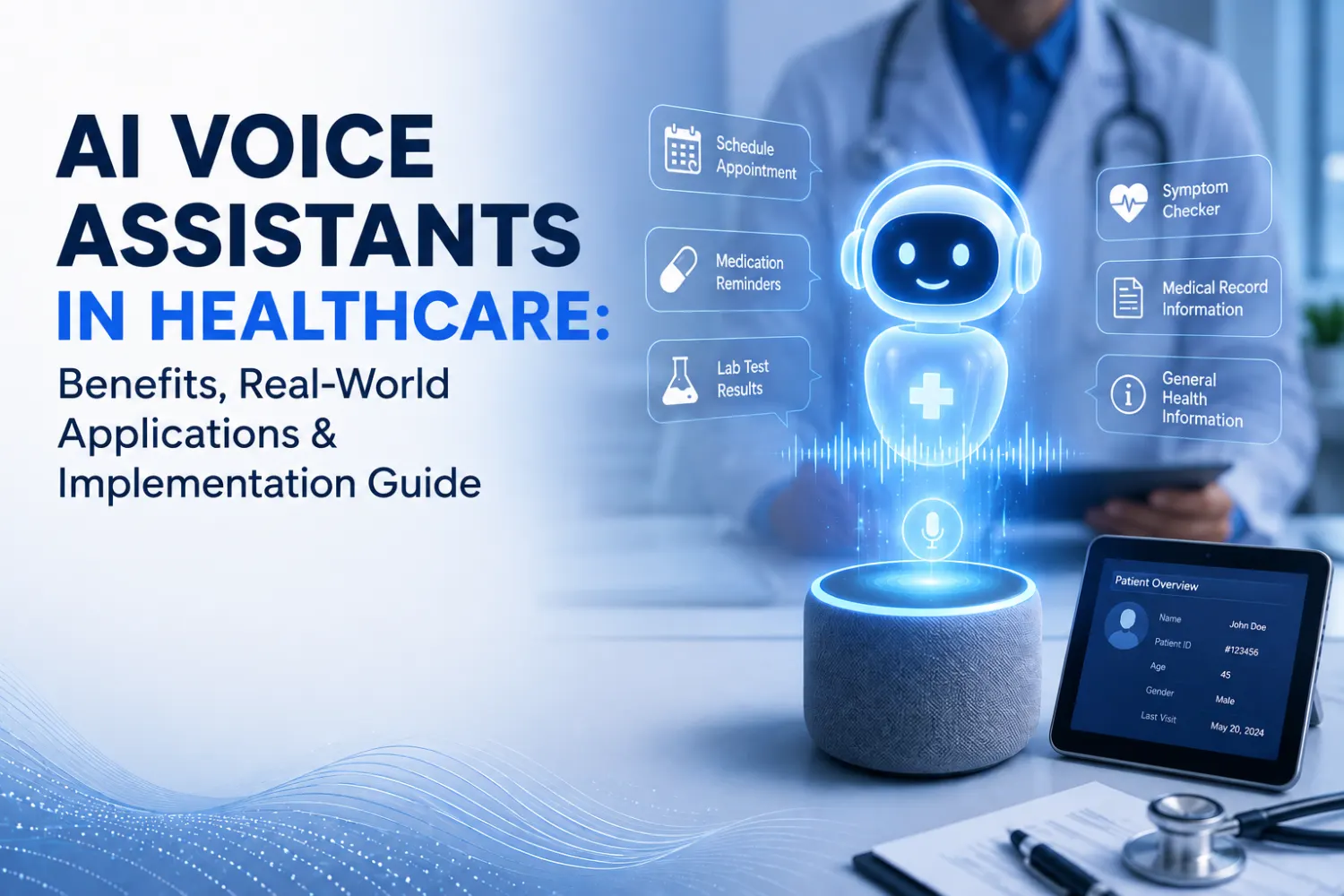
Healthcare is becoming smarter, faster, and more connected—and one technology driving this transformation is AI-powered voice technology.
From voice-enabled patient support to automated medical documentation, healthcare organizations are increasingly adopting AI voice assistants to improve patient care, reduce administrative workload, and enhance operational efficiency.
In 2026, voice-driven healthcare systems are no longer futuristic innovations—they are becoming essential tools for modern hospitals, clinics, and healthcare providers.
At True Value Infosoft, we help healthcare organizations build intelligent digital solutions powered by AI, automation, and voice technologies.
Let’s explore how AI voice assistants are transforming healthcare, their key benefits, real-world applications, and how businesses can implement them successfully.
What Are AI Voice Assistants in Healthcare?
AI voice assistants are intelligent systems that use:
- Artificial Intelligence (AI)
- Natural Language Processing (NLP)
- Speech Recognition Technology
- Machine Learning
to understand and respond to human voice commands.
In healthcare, these systems can:
- Assist patients with appointments
- Provide medication reminders
- Support doctors with voice-based documentation
- Automate patient communication
- Enable hands-free access to medical information
Unlike traditional IVR systems, modern AI voice assistants can understand context, intent, and natural conversation.
Why Voice Technology Is Growing in Healthcare
Healthcare organizations are under pressure to:
- Improve patient experiences
- Reduce administrative burden
- Handle increasing patient volumes
- Deliver faster support services
AI-powered voice systems help solve these challenges by automating communication and simplifying workflows.
The growing adoption of telemedicine, remote healthcare, and digital transformation is also accelerating demand for voice-enabled healthcare solutions.
Key Benefits of AI Voice Technology in Healthcare
1. Improved Patient Experience
Patients can interact with healthcare systems using simple voice commands instead of navigating complex menus or waiting on hold.
Voice assistants can:
- Schedule appointments
- Answer common questions
- Provide healthcare guidance
- Send medication reminders
This creates a more accessible and user-friendly experience.
2. Reduced Administrative Workload
Doctors and healthcare staff spend significant time on manual documentation and repetitive tasks.
Voice-enabled systems help automate:
- Clinical note creation
- Patient record updates
- Appointment management
- Follow-up reminders
This allows healthcare professionals to focus more on patient care.
3. Faster Access to Medical Information
Voice assistants can help healthcare professionals quickly retrieve information such as:
- Patient records
- Lab reports
- Medication history
- Treatment plans
Hands-free access is especially useful during emergency situations.
4. Better Accessibility for Patients
Voice technology improves healthcare accessibility for:
- Elderly patients
- Visually impaired individuals
- Patients with mobility limitations
Patients can interact naturally without needing technical expertise.
5. Enhanced Remote Patient Support
AI voice systems can support remote healthcare services by:
- Conducting symptom checks
- Monitoring patient responses
- Sending alerts for abnormal conditions
This improves continuity of care outside hospitals and clinics.
Real-World Use Cases of AI Voice Technology in Healthcare
Voice-Based Appointment Scheduling
Patients can book, reschedule, or cancel appointments through voice interactions without speaking to support staff.
AI Medical Documentation
Doctors can dictate notes, prescriptions, and patient observations directly into the system using voice commands.
AI automatically converts speech into structured medical records.
Voice-Enabled Virtual Health Assistants
Healthcare providers use AI voice assistants to answer patient questions related to:
- Symptoms
- Medications
- Treatment procedures
- Post-surgery care
Medication Reminder Systems
Voice-enabled systems remind patients to take medications on time and provide dosage instructions.
Emergency Response Assistance
Voice AI systems can help during emergencies by quickly collecting patient information and triggering alerts.
Challenges in Implementing Voice Technology in Healthcare
While voice technology offers major advantages, healthcare organizations must address certain challenges.
Data Privacy & Security
Healthcare data is highly sensitive. Voice systems must comply with security and privacy regulations.
Speech Recognition Accuracy
Medical terminology and accents can affect voice recognition performance.
AI models need proper training and optimization.
Integration Complexity
Voice systems must integrate with:
- Electronic Health Records (EHR)
- Hospital management systems
- Telemedicine platforms
User Adoption
Healthcare staff and patients may require training to use voice-enabled systems effectively.
How to Implement AI Voice Technology in Healthcare
Step 1: Identify Business Requirements
Define where voice technology can create the most impact.
For example:
- Appointment automation
- Patient support
- Clinical documentation
Step 2: Choose the Right AI Voice Platform
Select technologies that support healthcare-specific workflows and compliance requirements.
Step 3: Integrate with Existing Systems
Ensure seamless integration with healthcare platforms and databases.
Step 4: Implement Security Measures
Use encryption, authentication, and secure cloud infrastructure to protect patient data.
Step 5: Train and Optimize
Continuously improve voice recognition accuracy and system performance using real-world interactions.
How True Value Infosoft Helps Healthcare Organizations
At True Value Infosoft, we build intelligent healthcare solutions powered by AI and automation technologies.
Our expertise includes:
- AI voice assistant development
- Healthcare automation systems
- Secure healthcare software solutions
- AI-powered patient engagement platforms
- Custom healthcare application development
We help healthcare organizations create scalable, secure, and user-friendly digital experiences.
The Future of Voice AI in Healthcare
Voice technology will continue evolving with advancements such as:
- Emotion-aware voice assistants
- Multilingual healthcare voice systems
- AI-powered virtual nurses
- Real-time voice analytics
As healthcare becomes more digital, voice-enabled interactions will become a standard part of patient care and hospital operations.
Conclusion
AI voice assistants are transforming healthcare by improving communication, reducing administrative workload, and enhancing patient experiences.
From voice-enabled appointment scheduling to AI-powered medical documentation, voice technology is helping healthcare providers deliver smarter and more efficient care.
Organizations that adopt voice-enabled healthcare solutions today will be better prepared for the future of digital healthcare.
If you're planning to build intelligent healthcare systems powered by AI and voice technology, True Value Infosoft can help you turn your vision into reality.