Introduction
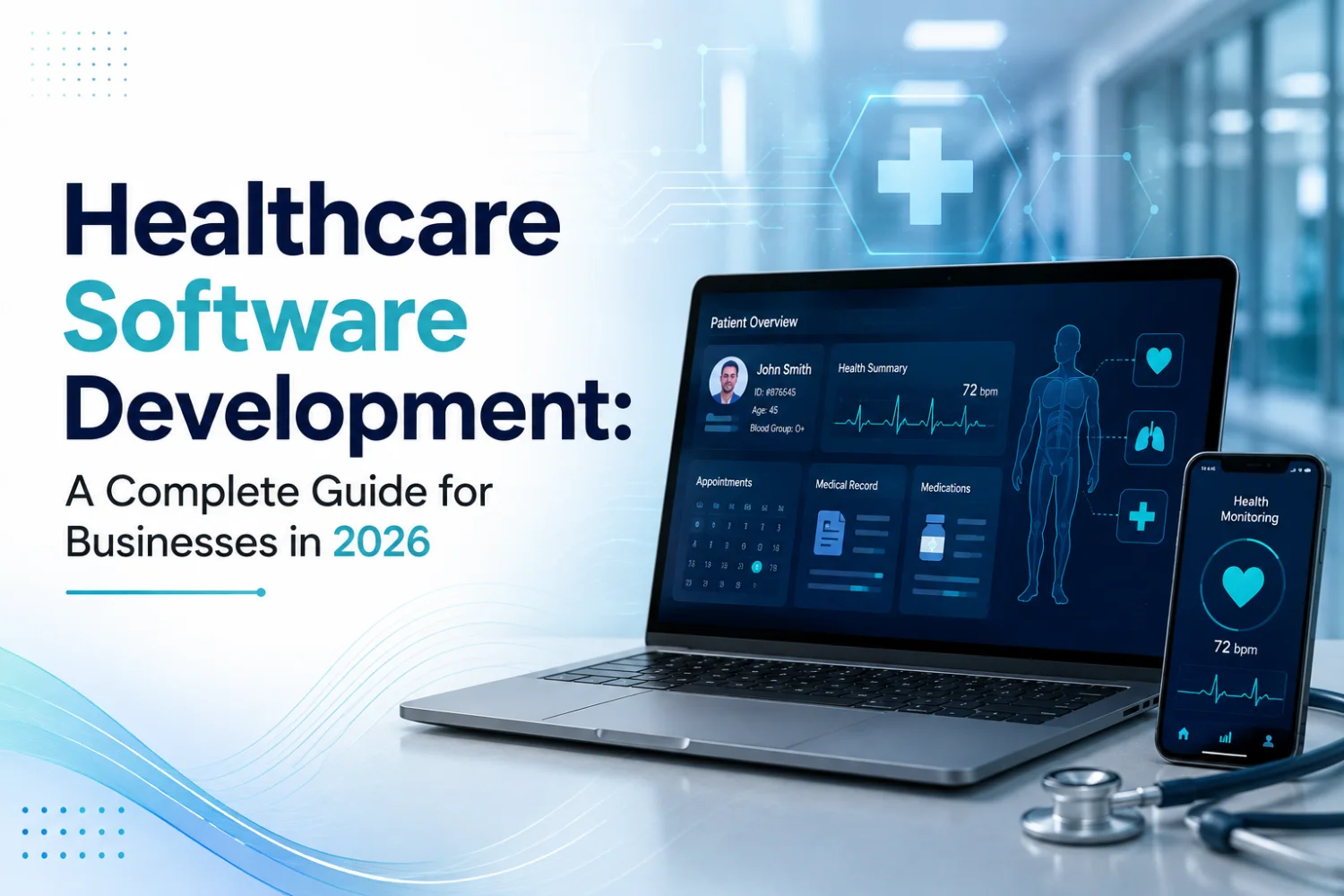
Healthcare is becoming increasingly digital. Hospitals, clinics, diagnostic centers, healthcare startups, and wellness providers are adopting software to improve patient experiences, streamline operations, manage data, and support better decision-making.
From appointment booking and telemedicine to electronic health records, hospital management, remote monitoring, and AI-powered tools, technology is now an important part of modern healthcare delivery.
However, healthcare software development is different from building a standard business application. Healthcare organizations must consider sensitive patient information, security, interoperability, usability, reliability, and regulatory requirements.
In 2026, businesses also need to think beyond standalone applications. Healthcare systems increasingly need to exchange information with other platforms and services, making interoperability an important consideration during software planning. The 2026 Interoperability Standards Advisory continues to highlight standards and implementation specifications for clinical, public health, research, and administrative interoperability.
This guide explains healthcare software development, the types of solutions businesses can build, the development process, key features, technology considerations, and how to choose the right development partner.
What Is Healthcare Software Development?
Healthcare software development is the process of designing, building, integrating, testing, and maintaining digital solutions for healthcare organizations and related businesses.
These solutions can be created for:
- Hospitals and clinics
- Diagnostic laboratories
- Healthcare startups
- Pharmacies
- Telemedicine providers
- Medical professionals
- Patients
- Health and wellness businesses
- Insurance and healthcare administration organizations
The goal is to solve real operational or patient-care challenges through secure and user-friendly technology.
A healthcare solution might include a web platform, mobile application, cloud-based system, or an integrated ecosystem connecting multiple applications.
Why Healthcare Businesses Need Custom Software in 2026
Off-the-shelf software can be useful for standard processes, but many healthcare organizations have unique workflows that require customization.
For example, a hospital may need to connect its:
- Appointment system
- Patient records
- Laboratory reports
- Billing software
- Doctor schedules
- Pharmacy management
- Mobile application
- Communication systems
Custom healthcare software can help bring these processes together.
True Value Infosoft's custom software development capabilities include scalable enterprise applications, cloud technologies, API integration, security features, and custom solutions designed around business requirements. The company also highlights experience serving industries including healthcare.
Types of Healthcare Software Businesses Can Develop
1. Hospital Management Systems (HMS)
A Hospital Management System helps healthcare organizations manage operational and administrative activities from a centralized platform.
Common modules may include:
- Patient registration
- Appointment management
- Doctor scheduling
- Billing and invoicing
- Bed management
- Pharmacy management
- Laboratory coordination
- Staff management
- Reporting and analytics
A custom HMS can be designed around the specific workflow of a hospital rather than forcing staff to adapt to a rigid system.
2. Electronic Health Record (EHR) and Patient Record Systems
Digital patient record systems help healthcare providers organize and access relevant patient information.
Depending on the intended use and applicable regulations, such systems may include:
- Patient demographics
- Medical history
- Consultation records
- Test results
- Prescriptions
- Treatment plans
- Clinical notes
Security, access controls, audit trails, and interoperability should be considered carefully when developing systems that process sensitive health information.
3. Telemedicine Applications
Telemedicine platforms allow patients and healthcare professionals to communicate remotely.
Typical features include:
- Online appointment booking
- Video consultations
- Secure messaging
- Digital prescriptions
- Payment integration
- Medical document sharing
- Consultation history
- Notifications
Telemedicine software can be particularly useful for organizations looking to improve accessibility and offer convenient patient services.
4. Healthcare Mobile Apps
Mobile applications can make healthcare services more accessible to patients.
A patient-facing app may include:
- Appointment booking
- Doctor discovery
- Health records
- Medication reminders
- Teleconsultation
- Lab report access
- Notifications
- Payment options
Healthcare providers can also use internal mobile applications for staff communication and operational management.
True Value Infosoft develops Android, iOS, and cross-platform applications and has healthcare-related projects within its broader mobile application portfolio.
5. Appointment and Scheduling Software
Managing appointments manually can create challenges such as double bookings, long waiting times, and administrative workload.
Healthcare appointment software can automate:
- Online bookings
- Doctor availability
- Appointment reminders
- Rescheduling
- Cancellation management
- Waiting lists
When integrated with other healthcare systems, appointment data can flow automatically across relevant workflows.
6. Remote Patient Monitoring Software
Remote monitoring platforms can collect or organize data from connected devices and other approved sources.
Depending on the solution, this may include:
- Vital signs
- Activity information
- Device readings
- Patient-reported data
- Alerts and notifications
These solutions should be designed with appropriate security, validation, and clinical oversight. Software should support healthcare professionals rather than make unsupported medical decisions.
7. Pharmacy Management Software
Pharmacies can use custom software to manage:
- Medicine inventory
- Prescriptions
- Orders
- Supplier information
- Billing
- Stock alerts
- Customer records
Automation can help reduce manual work and improve visibility across pharmacy operations.
8. Laboratory and Diagnostic Software
Diagnostic organizations can use software to manage the journey from test booking to report delivery.
Potential features include:
- Test booking
- Sample tracking
- Lab workflow management
- Result management
- Digital report delivery
- Patient notifications
- Integration with healthcare providers
The Healthcare Software Development Process
Successful healthcare software begins with understanding the business problem—not with choosing a programming language or AI tool.
Step 1: Understand Business and User Requirements
The development team should identify:
- Who will use the software?
- What problem will it solve?
- Which workflows need improvement?
- What systems already exist?
- What information needs to be exchanged?
- What security and compliance obligations apply?
Stakeholders may include healthcare administrators, clinicians, staff, patients, IT teams, and compliance professionals.
True Value Infosoft follows a structured development approach that begins with understanding requirements, followed by prototyping and system design.
Step 2: Define the Scope and MVP
Not every feature needs to be built during the first release.
A Minimum Viable Product (MVP) can help businesses validate the concept with essential features before investing in a larger platform.
For example, the first version of a telemedicine app could include:
- Patient registration
- Doctor profiles
- Appointment booking
- Video consultation
- Basic notifications
Additional features can be introduced based on user feedback and business requirements.
Step 3: Design the User Experience
Healthcare software must be easy to use for different audiences.
For example:
- Patients may need a simple appointment-booking experience.
- Doctors may need quick access to relevant information.
- Administrators may require dashboards and reports.
- Staff may need clear workflows for managing daily tasks.
A confusing interface can slow down adoption and reduce the value of the software.
Step 4: Design the Software Architecture
The architecture should support the application's current and future requirements.
Important considerations include:
- Scalability
- Performance
- Availability
- Integration requirements
- Database design
- Role-based access
- Backup and recovery
- Cloud or on-premises deployment
Healthcare businesses should also plan for future growth instead of building a system that only supports today's requirements.
Step 5: Develop and Integrate the Solution
During development, the team builds the application and connects it with relevant systems.
Possible integrations include:
- Payment gateways
- Video platforms
- Messaging services
- Laboratory systems
- CRM systems
- APIs
- Wearable devices
- Third-party healthcare platforms
The growing importance of interoperability means businesses should evaluate how their systems will exchange information with relevant applications and partners.
Step 6: Test for Quality and Security
Healthcare software should undergo thorough testing before launch.
Testing may include:
- Functional testing
- Performance testing
- Security testing
- Integration testing
- Usability testing
- Mobile compatibility testing
- Data validation
The testing strategy should reflect the risks associated with the specific application.
Step 7: Deploy and Maintain
Software development does not end at launch.
A long-term plan should include:
- Performance monitoring
- Bug fixes
- Security updates
- Feature improvements
- Backup and recovery processes
- Scalability planning
True Value Infosoft also emphasizes ongoing support and maintenance for software and applications after launch.
Essential Features of Modern Healthcare Software
The exact features depend on the solution, but businesses should consider the following.
Secure User Authentication
Different users require different levels of access.
Examples include:
- Patients
- Doctors
- Nurses
- Administrators
- Support staff
Role-based access helps ensure users can access only the information and functions appropriate to their responsibilities.
Data Security
Healthcare software often handles sensitive information.
Security measures may include:
- Encryption
- Secure authentication
- Multi-factor authentication
- Access controls
- Secure APIs
- Audit logging
- Regular security reviews
- Secure backups
True Value Infosoft's custom software development offering highlights security technologies and measures such as SSL encryption, firewalls, and multi-factor authentication.
Interoperability
Healthcare organizations often rely on multiple systems. A modern platform should be designed with integration in mind.
This can help connect systems such as:
Patient App ↔ Appointment System ↔ EHR ↔ Laboratory ↔ Billing
Interoperability requirements should be evaluated early because they can influence architecture, data models, APIs, and development costs.
Automation
Automation can reduce repetitive administrative work.
Examples include:
- Appointment reminders
- Follow-up notifications
- Report delivery
- Payment reminders
- Internal task routing
- Data synchronization
Analytics and Reporting
Healthcare businesses can benefit from dashboards that provide operational visibility.
Examples include:
- Appointment trends
- Patient engagement
- Resource utilization
- Operational performance
- Revenue reporting
Analytics should be designed around business needs and appropriate data governance practices.
The Role of AI in Healthcare Software Development
AI is becoming an increasingly important technology for healthcare software, but it must be implemented responsibly.
Potential use cases include:
- Intelligent appointment assistance
- Document processing
- Workflow automation
- Patient communication
- Data analysis
- Administrative support
- AI-powered search
- Predictive analytics
AI systems used in healthcare should be carefully evaluated based on their intended purpose, data quality, risks, accuracy, transparency, and level of human oversight.
A responsible approach is particularly important when AI affects sensitive information or supports high-impact decisions.
Key Challenges in Healthcare Software Development
1. Data Privacy and Security
Healthcare data is highly sensitive. Security should be part of the development process from the beginning rather than an afterthought.
2. Complex Integrations
Healthcare businesses often use multiple legacy and modern systems that may not communicate easily.
3. User Adoption
A technically advanced system can still fail if it is difficult for patients or staff to use.
4. Scalability
A system must be prepared to handle more users, locations, data, and integrations as the organization grows.
5. Regulatory and Compliance Requirements
Requirements vary depending on the country, market, type of organization, and nature of the data. Businesses should work with appropriate legal and compliance professionals to determine the requirements that apply to their solution.
How Much Does Healthcare Software Development Cost?
The cost of healthcare software development depends on factors such as:
- Type of application
- Number of features
- Web, mobile, or both
- Integrations
- AI functionality
- Security requirements
- UI/UX complexity
- Compliance requirements
- Scalability needs
A simple appointment platform and a multi-hospital healthcare ecosystem will have very different development requirements.
The best approach is to start with a clear scope and prioritize the features that deliver the most value.
How to Choose a Healthcare Software Development Company
Selecting the right development partner is a long-term decision.
Consider the following:
Technical Expertise
Look for experience with web, mobile, cloud, integrations, and emerging technologies relevant to your project.
Custom Development Capability
Healthcare workflows vary significantly. The partner should be able to adapt the solution to your business requirements.
Security Approach
Ask how authentication, access control, encryption, testing, and secure development practices will be addressed.
Scalability
The architecture should support future users, locations, and features.
Communication and Transparency
A structured development process with clear milestones can help reduce misunderstandings.
Post-Launch Support
Ensure the company can support updates, maintenance, and future improvements.
Why Choose True Value Infosoft for Healthcare Software Development?
True Value Infosoft provides custom web, mobile, software, and AI solutions for businesses across multiple industries, including healthcare. Its services cover custom software development, mobile app development, AI solutions, cloud-based applications, and end-to-end digital development.
For healthcare organizations, a suitable solution may involve:
- Custom healthcare software development
- Healthcare mobile app development
- Web application development
- Appointment and scheduling platforms
- CRM and enterprise software
- API Integration
- AI-powered workflow automation
- Cloud solutions
- Ongoing maintenance and support
The focus should always be on building a solution around the organization's workflows, users, and long-term objectives.
Conclusion
Healthcare software is no longer limited to large hospital systems. Clinics, startups, diagnostic centers, pharmacies, wellness businesses, and healthcare enterprises can all use custom digital solutions to improve operations and create better experiences.
In 2026, successful healthcare software needs to balance innovation, usability, security, scalability, and interoperability.
Whether you want to build a healthcare mobile app, telemedicine platform, appointment system, patient management solution, or enterprise healthcare platform, the right development strategy begins with a clear understanding of your business requirements.
True Value Infosoft can help transform your healthcare software idea into a scalable digital solution—from strategy and UI/UX design to development, integration, deployment, and ongoing support.
Ready to build a secure and scalable healthcare solution? Contact True Value Infosoft to discuss your healthcare software development requirements.