Introduction
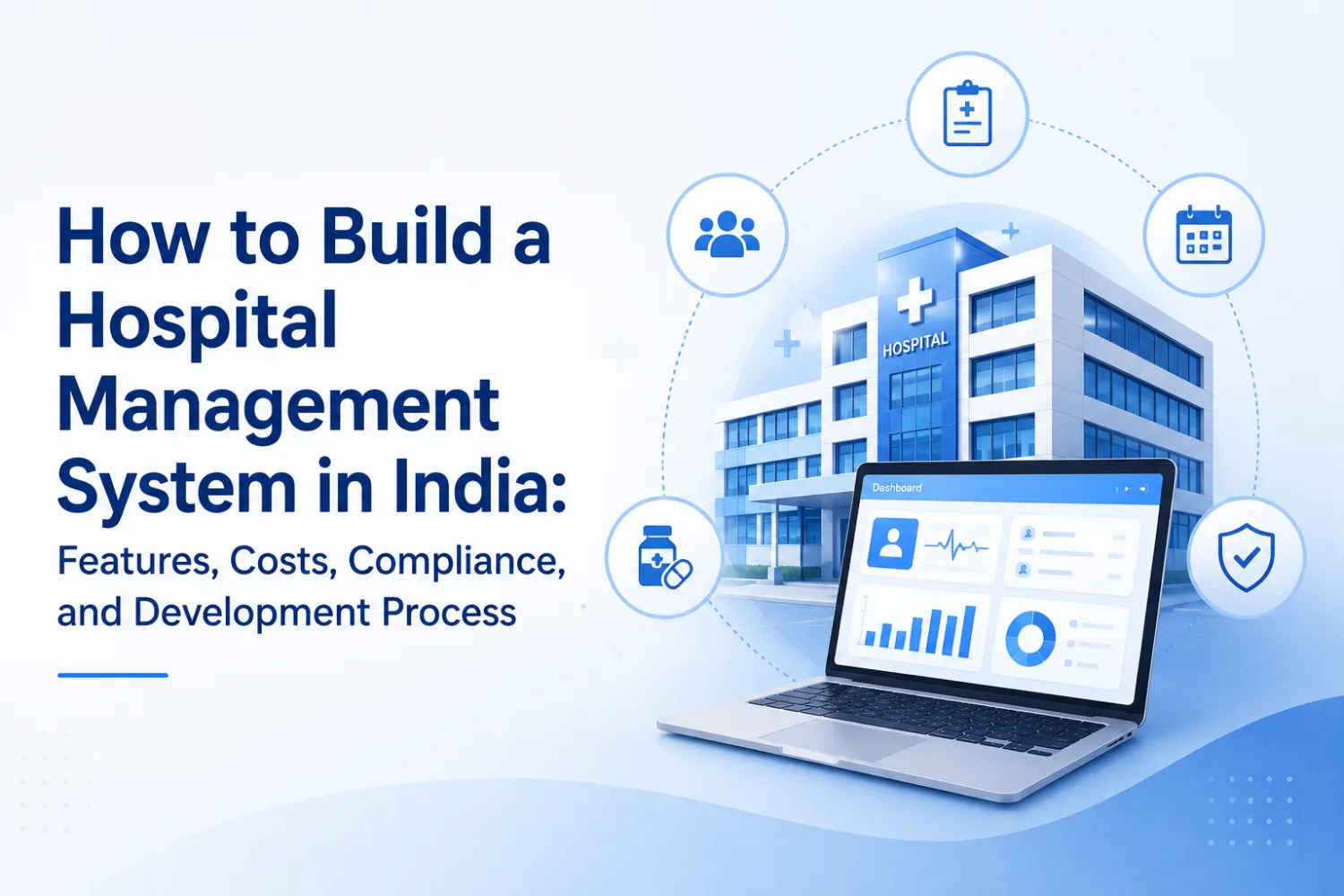
India's healthcare industry is rapidly embracing digital transformation. From multi-specialty hospitals and diagnostic centers to clinics and telemedicine providers, healthcare organizations are investing in Hospital Management Systems (HMS) to improve patient care, streamline operations, and meet evolving government regulations.
With initiatives like Ayushman Bharat Digital Mission (ABDM), ABHA Health IDs, and increasing demand for electronic health records, modern hospital software has become a necessity rather than a luxury. India's digital health ecosystem is being built around interoperable, standards-based infrastructure that healthcare software can integrate with.
If you're planning to build a Hospital Management System in India, this guide covers everything you need to know—from essential features and compliance requirements to development costs and implementation.
What is a Hospital Management System (HMS)?
A Hospital Management System is an integrated software platform that digitizes and automates hospital operations, including:
- Patient Registration
- Appointment Scheduling
- Electronic Medical Records (EMR)
- Billing & Payments
- Laboratory Management
- Pharmacy Management
- Inventory Management
- Doctor Scheduling
- Operation Theatre Management
- Insurance & Claims
- Reporting & Analytics
Instead of managing multiple disconnected systems, hospitals use a centralized HMS to improve efficiency and patient experience.
Why Indian Hospitals Need HMS Software
Healthcare organizations in India face several operational challenges:
- Long patient waiting times
- Paper-based medical records
- Billing errors
- Manual inventory tracking
- Insurance claim delays
- Department coordination issues
- Compliance with government digital health initiatives
- Data security and privacy concerns
A well-designed Hospital Management System addresses these challenges while improving operational efficiency and patient satisfaction.
Essential Features of a Hospital Management System
1. Patient Registration
- Digital registration
- ABHA integration
- Unique patient ID
- Digital consent management
- Patient history
2. Appointment Management
- Online booking
- Doctor availability
- SMS & WhatsApp reminders
- Queue management
- Walk-in registration
3. Electronic Medical Records (EMR)
- Patient history
- Diagnoses
- Prescriptions
- Clinical notes
- Lab reports
- Imaging reports
- Discharge summaries
4. OPD & IPD Management
- Admission
- Bed allocation
- Ward management
- Nursing workflows
- Discharge process
5. Laboratory Information System (LIS)
- Test booking
- Sample tracking
- Automated reports
- Doctor access
- Result notifications
6. Pharmacy Management
- Prescription management
- Inventory
- Expiry tracking
- Barcode scanning
- Stock alerts
7. Billing & Finance
- GST-compliant billing
- Insurance billing
- Cashless claims
- Payment gateway integration
- Invoice generation
8. Inventory Management
- Medical supplies
- Vendor management
- Purchase orders
- Stock tracking
- Low-stock alerts
9. Doctor & Staff Management
- Shift scheduling
- Attendance
- Payroll integration
- Department management
10. Reports & Analytics
- Revenue reports
- OPD statistics
- Occupancy rate
- Pharmacy sales
- Inventory usage
- Doctor performance
Advanced Features
Modern hospitals increasingly require:
- AI-powered appointment scheduling
- AI chatbot for patient support
- Telemedicine integration
- Video consultation
- Online payments
- Digital prescriptions
- Mobile applications
- Multi-branch management
- Cloud deployment
- Voice-enabled clinical notes
- Predictive analytics
- Patient mobile app
Compliance Requirements in India
Building healthcare software in India requires compliance with national digital health standards and data protection requirements.
ABDM Integration
Ayushman Bharat Digital Mission (ABDM) enables interoperability across India's healthcare ecosystem. HMS platforms should support:
- ABHA ID integration
- Health Facility Registry (HFR)
- Healthcare Professional Registry (HPR)
- Consent-based data sharing
- FHIR-compatible health records
These integrations allow hospitals to securely exchange patient records while maintaining patient control over their data.
Data Privacy
Hospitals should implement:
- Role-based access
- Encryption
- Audit logs
- Secure authentication
- Regular backups
- Disaster recovery
Compliance with applicable Indian data protection laws and healthcare privacy practices is essential.
GST Compliance
Billing modules should support:
- GST invoices
- Tax calculations
- Financial reports
- Accounting integrations
Technology Stack
A scalable Hospital Management System may use:
Frontend
- React.js
- Angular
- Vue.js
Backend
- Node.js
- .NET
- Java Spring Boot
Database
- PostgreSQL
- MySQL
- MongoDB
Cloud
- AWS
- Microsoft Azure
- Google Cloud
Mobile
- Flutter
- React Native
Development Process
Step 1: Requirement Analysis
Understand:
- Hospital size
- Departments
- User roles
- Existing workflows
- Compliance needs
Step 2: UI/UX Design
Create:
- Wireframes
- User flows
- Dashboard designs
- Mobile interfaces
Step 3: Architecture Planning
Define:
- Database structure
- APIs
- Security model
- Integrations
- Cloud infrastructure
Step 4: Development
Modules are typically developed in phases:
- Patient Management
- Doctor Portal
- Billing
- Pharmacy
- Laboratory
- Inventory
- Admin Dashboard
Step 5: Testing
Perform:
- Functional testing
- Security testing
- Performance testing
- Compliance validation
- User acceptance testing (UAT)
Step 6: Deployment
Deploy on:
- Cloud
- On-premise
- Hybrid infrastructure
Step 7: Maintenance
Continuous support includes:
- Feature updates
- Security patches
- Performance optimization
- Technical support
Estimated Development Cost in India
The overall cost depends on the scope, number of modules, integrations, deployment model, and compliance requirements.
| Project Type | Estimated Cost (INR) |
|---|---|
| Basic Clinic Management System | ₹8 Lakhs – ₹15 Lakhs |
| Mid-sized Hospital HMS | ₹18 Lakhs – ₹40 Lakhs |
| Enterprise Multi-Hospital HMS | ₹45 Lakhs – ₹1 Crore+ |
| AI-enabled Smart Hospital Platform | ₹75 Lakhs – ₹2 Crores+ |
Costs vary based on customization, third-party integrations, mobile apps, and regulatory requirements.
Common Integrations
A modern HMS often integrates with:
- Payment Gateways
- SMS & Email Services
- WhatsApp Notifications
- Diagnostic Machines
- Insurance Providers
- Accounting Software
- Telemedicine Platforms
- ERP Systems
- HRMS
- BI & Analytics Tools
Benefits of Hospital Management Software
Healthcare providers benefit from:
- Faster patient registration
- Reduced paperwork
- Improved doctor productivity
- Better inventory control
- Lower operational costs
- Accurate billing
- Enhanced patient experience
- Real-time analytics
- Regulatory readiness
- Improved data security
Future Trends in Hospital Management Systems
Healthcare technology in India is evolving rapidly. Key trends include:
- Artificial Intelligence
- Predictive Healthcare Analytics
- Remote Patient Monitoring
- IoT-enabled Medical Devices
- Voice AI for Doctors
- Cloud-native Hospital Platforms
- Interoperable Digital Health Records
- Generative AI Assistants
- Automation for Administrative Workflows
Why Choose True Value Infosoft?
At True Value Infosoft we build secure, scalable, and custom healthcare software solutions tailored to the needs of hospitals, clinics, diagnostic centers, and healthcare startups across India.
Our expertise includes:
- Custom Hospital Management Systems
- Electronic Medical Records (EMR)
- Telemedicine Platforms
- Healthcare Mobile Apps
- AI-Powered Healthcare Solutions
- Cloud-Based HMS Development
- ABDM-Ready System Integration
- API Integrations
- Ongoing Maintenance & Support
Whether you're launching a new healthcare platform or modernizing an existing hospital system, our team delivers solutions focused on compliance, performance, and long-term scalability.
Conclusion
As India's healthcare sector accelerates its digital transformation, investing in a modern Hospital Management System is becoming essential for delivering efficient, patient-centric care. By incorporating comprehensive clinical and administrative modules, supporting national digital health initiatives such as ABDM, and leveraging cloud and AI technologies, healthcare providers can improve operational efficiency while preparing for future growth. Choosing the right technology partner ensures your HMS is secure, scalable, compliant, and aligned with your organization's long-term goals.