Introduction
Artificial Intelligence is transforming modern businesses at an unprecedented pace.
From AI-powered automation and intelligent analytics to AI copilots and enterprise AI agents, organizations are rapidly integrating AI into their daily operations to improve productivity and efficiency.
But alongside this transformation, a new cybersecurity concern is emerging:
Shadow AI
In 2026, many businesses are unknowingly exposing sensitive company data through unauthorized or unregulated AI tools used by employees and teams.
At True Value Infosoft, we help organizations adopt AI securely while minimizing cybersecurity risks and compliance issues.
In this blog, we’ll explore what Shadow AI is, why it’s becoming a major threat in enterprise digital transformation, and how businesses can protect themselves.
What Is Shadow AI?
Shadow AI refers to the use of AI tools, applications, or platforms within an organization without official approval or oversight from the IT or security team.
Examples include employees using:
- Public AI chatbots for business tasks
- AI writing tools for confidential documents
- AI code assistants connected to company repositories
- Unapproved AI analytics tools
While these tools may improve productivity, they can also create serious security vulnerabilities.
Why Shadow AI Is Growing Rapidly
The rise of generative AI and AI assistants has made advanced tools easily accessible to employees.
In many organizations:
- Teams adopt AI tools faster than IT departments can regulate them
- Employees prioritize convenience and productivity
- AI platforms are integrated into workflows without security review
As a result, businesses often lose visibility into how sensitive data is being shared or processed.
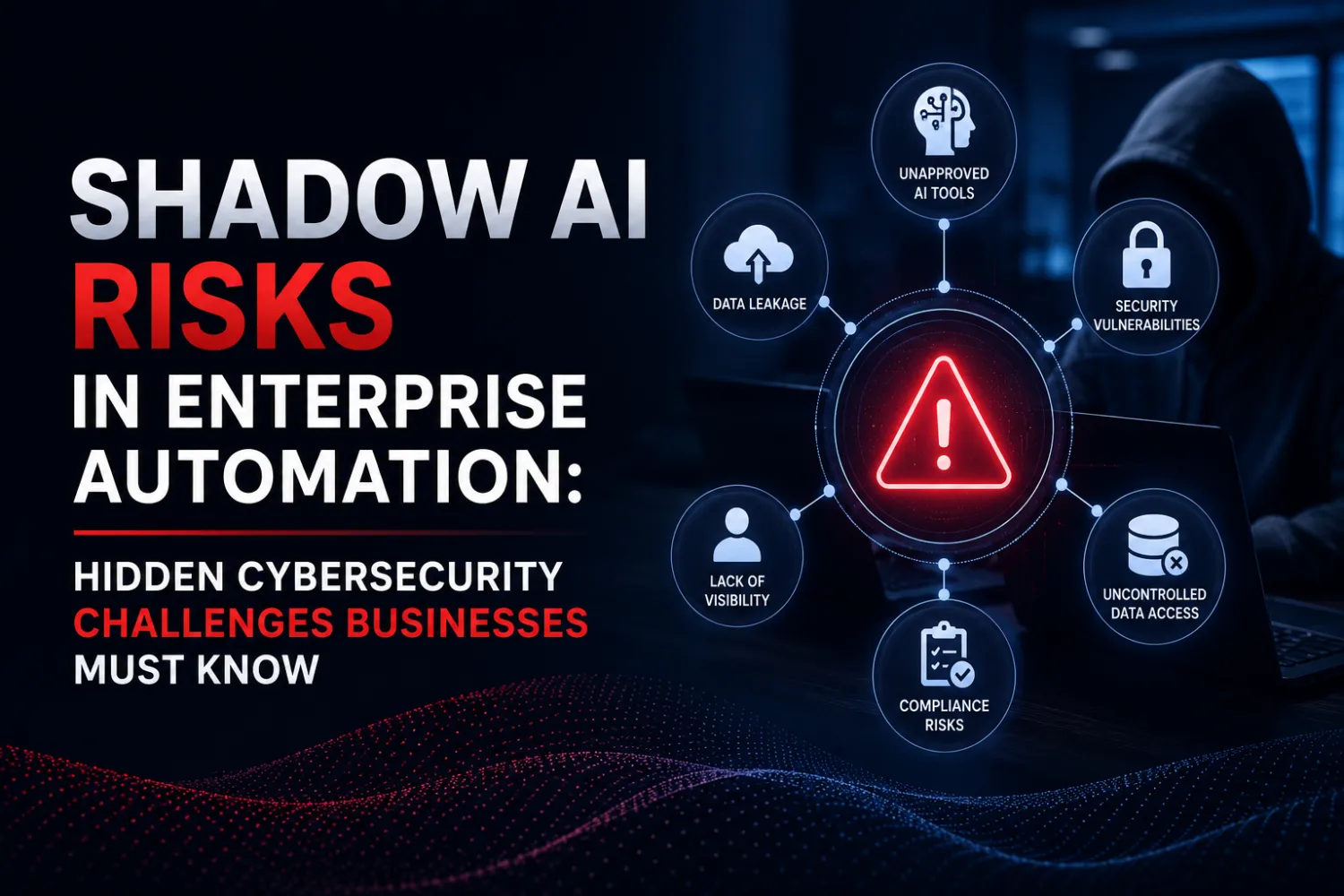
The Hidden Risks of Shadow AI
1. Data Leakage & Confidential Information Exposure
One of the biggest risks of Shadow AI is employees uploading sensitive business information into public AI systems.
This may include:
- Client contracts
- Financial reports
- Source code
- Internal business strategies
- Customer information
If the AI platform stores or trains on this data, organizations may lose control over confidential information.
2. Compliance & Regulatory Violations
Industries such as healthcare, finance, and legal services must comply with strict data privacy regulations.
Unauthorized AI usage may violate:
- GDPR
- HIPAA
- Data protection policies
- Internal compliance frameworks
This can lead to legal penalties and reputational damage.
3. AI-Generated Security Vulnerabilities
AI coding assistants can sometimes generate insecure code or expose vulnerabilities in software systems.
Without proper review, organizations risk:
- Weak authentication systems
- Security loopholes
- Data exposure risks
4. Lack of Governance & Visibility
When employees use unapproved AI tools, IT teams cannot monitor:
- What data is being uploaded
- How AI systems process information
- Whether tools meet security standards
This creates major governance challenges.
5. Increased Cyberattack Surface
Every unauthorized AI platform becomes a potential entry point for cyber threats.
Attackers may exploit:
- Weak API integrations
- Poor authentication systems
- Insecure AI plugins
This expands the organization’s cybersecurity risk.
Real-World Enterprise Challenges
Many enterprises are facing situations where:
- Employees use AI chatbots to summarize confidential reports
- Developers paste proprietary code into public AI coding tools
- HR teams use AI tools to analyze employee data without approval
While these actions may seem harmless, they can expose highly sensitive information.
How Businesses Can Reduce Shadow AI Risks
1. Establish Clear AI Usage Policies
Organizations should define:
- Approved AI tools
- Acceptable use guidelines
- Data-sharing restrictions
- Security protocols
Employees must understand what is allowed and what is not.
2. Deploy Enterprise-Grade AI Solutions
Instead of relying on public tools, businesses should implement secure enterprise AI platforms with:
- Data encryption
- Access control
- Private AI environments
- Compliance monitoring
3. Train Employees on AI Security
Cybersecurity awareness programs should include:
- AI-related data risks
- Secure AI usage practices
- Compliance requirements
Employee education is essential.
4. Monitor AI Tool Usage
Organizations should track:
- AI application usage
- API integrations
- Data access patterns
This improves visibility and governance.
5. Build Secure AI Infrastructure
AI systems should be designed with:
- Strong authentication
- Secure APIs
- Regular vulnerability testing
- Compliance-first architecture
Security must be integrated from the beginning.
The Role of AI Governance in 2026
As AI adoption grows, AI governance is becoming a critical business priority.
Modern enterprises need frameworks that define:
- Responsible AI usage
- Data handling procedures
- Security standards
- Risk management protocols
Without governance, AI transformation can introduce more risks than benefits.
How True Value Infosoft Helps Businesses Secure AI Systems
At True Value Infosoft, we help organizations build secure, scalable, and compliant AI solutions.
Our expertise includes:
- Enterprise AI development
- AI security and governance solutions
- Secure AI workflow automation
- AI-powered cybersecurity systems
- Custom AI application development
We help businesses adopt AI confidently while protecting critical data and infrastructure.
The Future of Secure Enterprise AI
The future of enterprise AI will focus heavily on:
- Responsible AI frameworks
- Secure AI environments
- AI governance platforms
- Zero-trust AI architectures
- AI compliance automation
Organizations that prioritize AI security today will be better prepared for tomorrow’s digital economy.
Conclusion
AI is transforming businesses—but without proper governance, Shadow AI can create serious cybersecurity and compliance risks.
Organizations must move beyond simply adopting AI tools and focus on building secure, monitored, and compliant AI ecosystems.
By implementing proper AI governance, employee training, and enterprise-grade security practices, businesses can unlock the full power of AI without compromising safety.
If your organization is planning enterprise AI adoption, True Value Infosoft can help you build secure and future-ready AI solutions.