Introduction
Artificial Intelligence (AI) has become one of the biggest driving forces behind digital transformation in the financial services industry. From fraud detection and customer support to investment management and credit risk assessment, AI is helping financial institutions improve efficiency, reduce operational costs, and deliver highly personalized customer experiences.
As digital banking, fintech startups, and online payment platforms continue to grow, businesses are investing heavily in AI-powered technologies to remain competitive.
In this blog, we'll explore how AI is revolutionizing fintech, its major use cases, industry statistics, benefits, challenges, and why partnering with an experienced AI development company like True Value Infosoft can accelerate your digital transformation journey.
What is AI in Fintech?
AI in fintech refers to the use of artificial intelligence technologies—including Machine Learning (ML), Natural Language Processing (NLP), Computer Vision, Predictive Analytics, and Generative AI—to automate financial operations, enhance security, improve decision-making, and provide intelligent customer services.
Unlike traditional software that follows predefined rules, AI systems continuously learn from data, enabling them to detect patterns, predict outcomes, and improve performance over time.
Why AI Matters in Financial Services
The financial industry generates massive amounts of customer and transactional data every day. Processing this data manually is impossible at scale.
AI enables financial institutions to:
- Detect fraud in real time
- Automate repetitive operations
- Improve customer engagement
- Make data-driven decisions
- Minimize financial risks
- Increase operational efficiency
- Deliver personalized financial products
Today, AI is no longer a competitive advantage—it's becoming a necessity.
Top AI Use Cases in Fintech
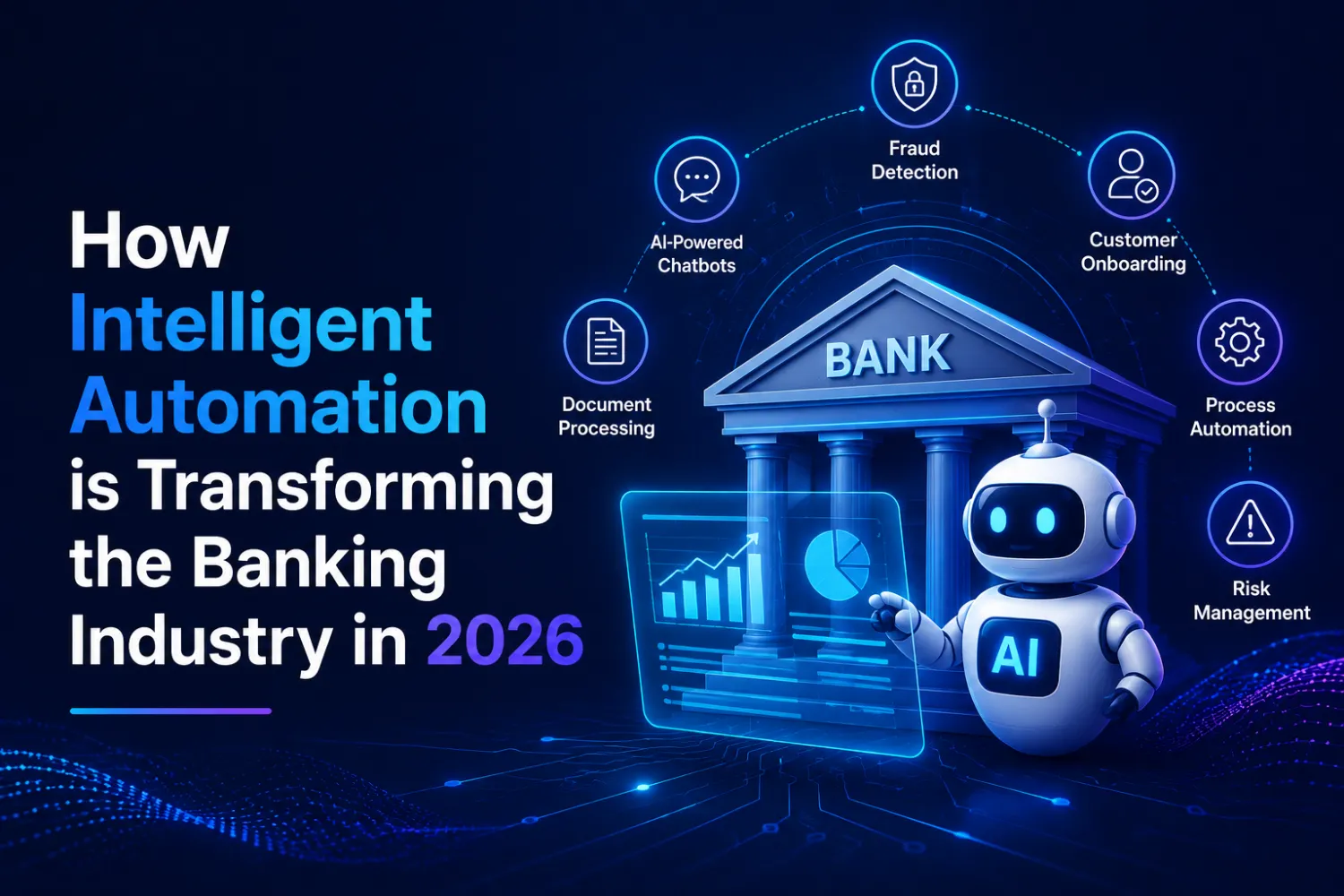
1. Fraud Detection & Prevention
One of the most valuable applications of AI in fintech is fraud detection.
Machine Learning Development enables financial institutions to analyze millions of transactions instantly and identify suspicious behavior that traditional systems often miss.
AI can detect:
- Card fraud
- Identity theft
- Money laundering
- Unusual transaction patterns
- Account takeover attempts
This significantly reduces financial losses while improving customer trust.
2. AI Chatbots & Virtual Banking Assistants
Modern banking customers expect 24/7 support.
Businesses are increasingly investing in AI Chatbot Development to provide 24/7 customer support, automate banking services, and improve customer satisfaction.
- Answer customer queries
- Check account balances
- Process loan requests
- Recommend financial products
- Assist with transactions
- Resolve common banking issues
This improves customer satisfaction while reducing support costs.
3. Personalized Financial Recommendations
AI studies customer spending habits, savings behavior, income patterns, and investment history to recommend:
- Savings plans
- Insurance products
- Credit cards
- Loan options
- Investment portfolios
This creates a personalized banking experience that increases customer engagement.
4. Credit Scoring & Loan Approval
Traditional credit scoring models rely on limited financial history.
AI evaluates multiple data sources including:
- Banking history
- Income stability
- Spending behavior
- Employment data
- Repayment patterns
This helps lenders make faster and more accurate lending decisions.
5. Algorithmic Trading
Investment firms use AI to analyze market trends, historical prices, news sentiment, and economic indicators.
AI-powered trading systems can:
- Predict market movements
- Optimize investment portfolios
- Reduce trading risks
- Execute trades automatically
6. Risk Management
Financial institutions use Predictive Analytics to identify risks before they become major problems and make more informed lending decisions.
AI helps assess:
- Credit risk
- Market risk
- Investment risk
- Operational risk
- Customer default probability
This improves financial planning and compliance.
7. Regulatory Compliance (RegTech)
Meeting financial regulations is expensive and time-consuming.
AI automates:
- KYC (Know Your Customer)
- AML (Anti-Money Laundering)
- Document verification
- Compliance reporting
- Risk monitoring
This reduces manual effort while improving accuracy.
8. Intelligent Document Processing
Banks process thousands of documents every day.
AI extracts information from:
- Loan applications
- Bank statements
- Identity documents
- Invoices
- Financial reports
This significantly reduces paperwork and processing time.
AI in Fintech Statistics
Recent industry trends highlight the rapid adoption of AI in financial services:
- AI adoption in banking continues to grow as institutions invest in automation and intelligent customer experiences.
- Fraud detection remains one of the largest AI investment areas in fintech.
- AI-powered chatbots now handle millions of customer interactions annually.
- Financial institutions are increasingly using predictive analytics for lending and risk management.
- Generative AI is emerging as a key technology for customer support, financial reporting, and internal knowledge management.
These trends indicate that AI is becoming a core part of modern financial operations.
Benefits of AI in Fintech
Improved Security
AI detects fraud faster than traditional rule-based systems.
Faster Decision Making
Automated data analysis enables real-time financial decisions.
Lower Operational Costs
Automation reduces manual work and operational expenses.
Better Customer Experience
Customers receive personalized recommendations and instant support.
Higher Accuracy
AI minimizes human errors in financial operations.
Scalability
AI systems can process millions of transactions without compromising performance.
Challenges of AI Adoption in Fintech
Although AI offers significant benefits, organizations must overcome several challenges.
Data Privacy
Financial institutions handle highly sensitive customer information that requires strong security and compliance.
Regulatory Compliance
AI solutions must comply with financial regulations and data protection laws.
Legacy Systems
Many banks still rely on outdated infrastructure, making AI integration more complex.
High Initial Investment
Implementing AI requires investment in technology, infrastructure, and skilled professionals.
Data Quality
AI models perform best when trained on accurate, high-quality data.
Future of AI in Fintech
The future of fintech is increasingly intelligent.
Businesses are increasingly adopting Generative AI Integration to automate customer support, financial reporting, and internal operations.
Future innovations may include:
- AI-powered financial planning
- Hyper-personalized banking experiences
- Voice-enabled banking assistants
- Autonomous investment management
- Intelligent fraud prevention
- Automated financial reporting
Businesses that adopt AI early will gain a significant competitive advantage.
How True Value Infosoft Helps Fintech Businesses
At True Value Infosoft we develop secure, scalable, and intelligent AI-powered fintech solutions tailored to your business needs.
Our expertise includes:
- AI Consulting
- Machine Learning Development
- Generative AI Integration
- Intelligent Automation
- AI Chatbot Development
- Predictive Analytics
- Banking Software Development
- Custom Fintech Application Development
- Mobile Banking Solutions
- Cloud-Based Financial Platforms
Whether you're a fintech startup or an established financial institution, our experts help you build secure, compliant, and future-ready AI solutions.
Conclusion
Artificial Intelligence is redefining the fintech landscape by making financial services smarter, faster, and more secure. From fraud prevention and intelligent customer support to predictive analytics and automated compliance, AI enables organizations to deliver exceptional customer experiences while reducing operational costs.
As AI technologies continue to evolve, businesses that invest today will be better positioned to innovate, scale, and compete in the rapidly changing financial market.
If you're planning to build an AI-powered fintech platform, our Custom Fintech Application Development and Banking Software Development services can help you create secure, scalable, and intelligent financial solutions.