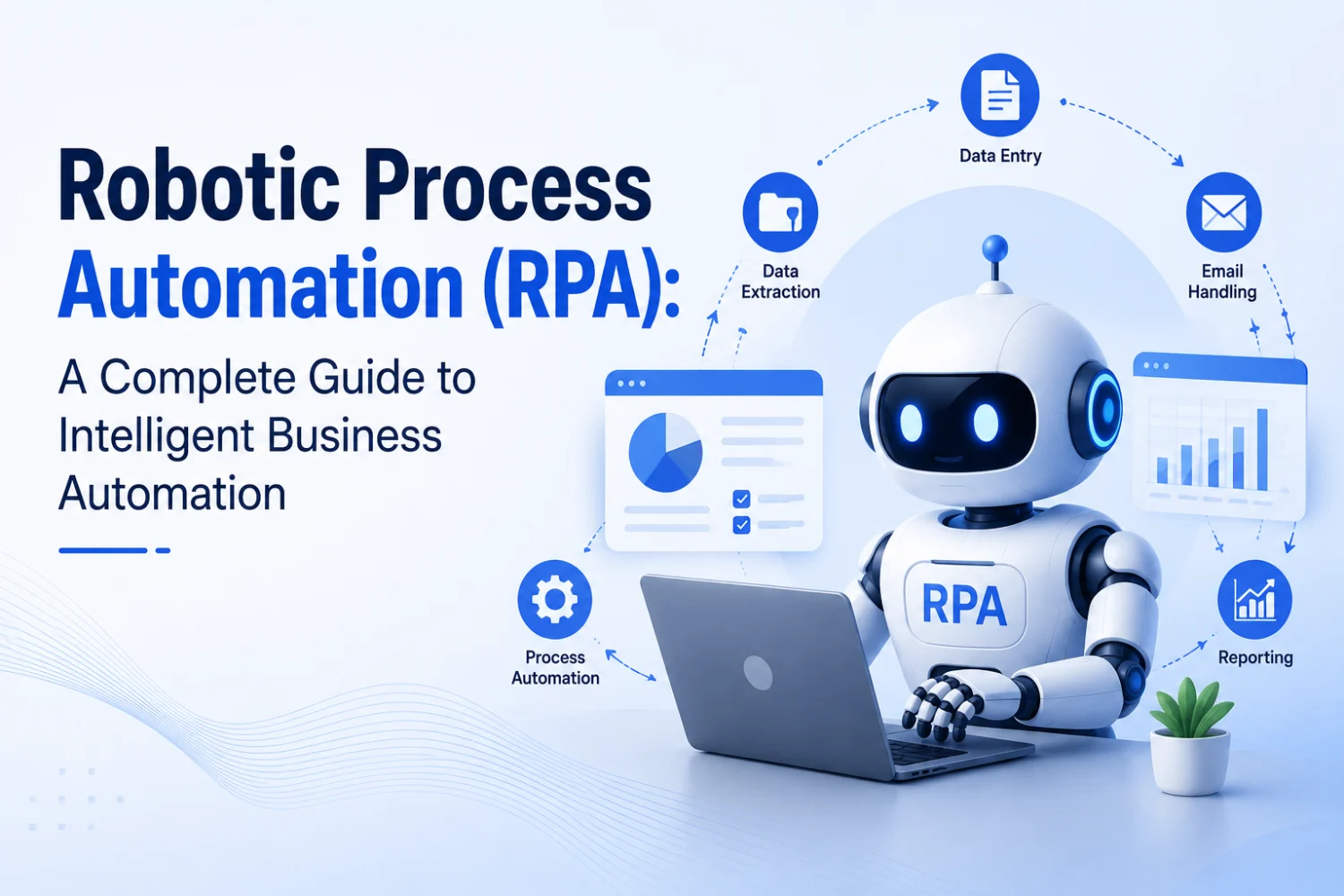
Robotic Process Automation (RPA): Everything Businesses Need to Know
Businesses today are constantly looking for ways to reduce operational costs, improve productivity, and eliminate repetitive manual work. One technology making this possible is Robotic Process Automation (RPA).
From processing invoices and managing employee records to automating customer support and financial reporting, RPA is helping organizations across industries work faster, smarter, and with fewer errors.
Whether you're a startup or an enterprise, implementing RPA can streamline operations, enhance customer experiences, and free your workforce to focus on strategic tasks.
In this guide, we'll explain what Robotic Process Automation is, how it works, its benefits, real-world use cases, implementation challenges, and how True Value Infosoft helps businesses build intelligent automation solutions.
What is Robotic Process Automation (RPA)?
Robotic Process Automation (RPA) is a technology that uses software bots to automate repetitive, rule-based digital tasks. These bots interact with applications, websites, databases, and enterprise software just like a human employee—but much faster and with greater accuracy.
Unlike physical robots, RPA bots operate entirely in software. They can log into systems, copy and paste data, fill out forms, generate reports, process transactions, and perform hundreds of repetitive tasks without human intervention.
RPA allows organizations to improve efficiency while reducing manual errors and operational costs.
How Does RPA Work?
RPA software follows predefined rules and workflows to execute tasks automatically.
A typical RPA workflow includes:
- Logging into business applications
- Collecting data from multiple systems
- Validating information
- Processing transactions
- Updating databases
- Sending notifications or reports
- Recording task completion for auditing
Because bots work 24/7 without fatigue, businesses can process thousands of transactions consistently and efficiently.
Types of Robotic Process Automation
1. Attended RPA
Attended bots assist employees by automating tasks while users are actively working. They are commonly used in customer service, banking, and healthcare.
Example:
A customer support representative clicks a button, and the bot automatically retrieves customer information from multiple systems.
2. Unattended RPA
Unattended bots work independently without human intervention. They perform scheduled or event-triggered processes such as invoice processing, payroll generation, and report creation.
Example:
Every night, an RPA bot generates sales reports and emails them to managers.
3. Hybrid RPA
Hybrid automation combines attended and unattended bots to automate complex business workflows while allowing human approvals when required.
Benefits of Robotic Process Automation
Increased Productivity
RPA automates repetitive tasks, allowing employees to focus on higher-value work.
Reduced Operational Costs
Businesses save time and resources by minimizing manual effort and improving process efficiency.
Improved Accuracy
Bots follow predefined rules, reducing the risk of human errors in data entry and processing.
Faster Processing
Tasks that previously required hours can often be completed within minutes.
Better Compliance
Every automated action is recorded, making auditing and regulatory compliance easier.
Enhanced Customer Experience
Automation speeds up response times, reduces delays, and improves service quality.
Real-World RPA Use Cases
1. Banking & Financial Services
Banks use RPA to automate:
- Loan processing
- Account opening
- KYC verification
- Invoice processing
- Compliance reporting
- Fraud monitoring
2. Healthcare
Healthcare providers automate:
- Patient registration
- Medical billing
- Insurance claim processing
- Appointment scheduling
- Electronic health record updates
3. Human Resources
HR departments use RPA for:
- Employee onboarding
- Payroll processing
- Attendance management
- Leave approvals
- Document verification
4. Retail & E-commerce
Retail companies automate:
- Inventory updates
- Order processing
- Shipping notifications
- Product data management
- Customer support requests
5. Manufacturing
Manufacturers use RPA for:
- Purchase order processing
- Inventory management
- Supplier communication
- Production reporting
- Quality documentation
RPA vs Traditional Automation
| Feature | Traditional Automation | RPA |
|---|---|---|
| Coding Required | High | Low |
| Integration | Complex | Easy |
| Implementation Time | Long | Fast |
| Works with Existing Systems | Limited | Yes |
| Scalability | Moderate | High |
| Cost | Higher | Lower |
Unlike traditional automation, RPA works with existing software without requiring major system changes.
Industries Using RPA
RPA is widely adopted across industries including:
- Banking & Finance
- Insurance
- Healthcare
- Retail
- Manufacturing
- Logistics
- Education
- Government
- Telecommunications
- Real Estate
As digital transformation accelerates, more industries are leveraging RPA to improve operational efficiency.
Challenges of RPA Implementation
Although RPA offers significant benefits, businesses should prepare for certain challenges.
Identifying the Right Processes
Not every process is suitable for automation. Businesses should prioritize repetitive, rule-based tasks with high transaction volumes.
Change Management
Employees may require training to work alongside automated systems and adopt new workflows.
System Changes
If existing software interfaces change frequently, bots may require updates to continue functioning correctly.
Security & Compliance
Organizations must ensure bots follow data privacy regulations and maintain secure access to sensitive information.
Process Standardization
Poorly designed or inconsistent workflows should be optimized before automation.
Future of RPA
The future of automation is moving beyond simple rule-based bots.
Modern RPA platforms are increasingly integrated with:
- Artificial Intelligence (AI)
- Machine Learning (ML)
- Intelligent Document Processing (IDP)
- Optical Character Recognition (OCR)
- Natural Language Processing (NLP)
- Generative AI
- AI Agents
These technologies enable businesses to automate not only repetitive tasks but also complex decision-making processes.
This evolution is often referred to as Intelligent Automation, combining RPA with AI to create smarter business operations.
Why Businesses Should Invest in RPA
Organizations implementing RPA often experience:
- Higher productivity
- Lower operational costs
- Faster business processes
- Increased employee satisfaction
- Better customer service
- Improved compliance
- Greater scalability
As businesses continue their digital transformation journey, RPA provides a practical and cost-effective way to automate operations without replacing existing systems.
How True Value Infosoft Helps Businesses with RPA
At True Value Infosoft, we help organizations automate business processes using intelligent Robotic Process Automation solutions tailored to their unique requirements.
Our automation expertise includes:
- RPA Consulting
- Business Process Automation
- Intelligent Workflow Automation
- AI-Powered Automation
- Custom Enterprise Software Development
- Machine Learning Development
- AI Chatbot Development
- Intelligent Document Processing
- CRM & ERP Integration
- Cloud-Based Automation Solutions
Whether you want to automate finance, HR, healthcare, logistics, or customer support operations, our experts build scalable, secure, and future-ready automation systems that deliver measurable business value.
Conclusion
Robotic Process Automation is transforming how businesses operate by eliminating repetitive tasks, improving accuracy, reducing costs, and increasing productivity. When combined with Artificial Intelligence, RPA becomes even more powerful, enabling organizations to automate complex workflows and make smarter business decisions.
For businesses looking to accelerate digital transformation, RPA is no longer just an efficiency tool—it's a strategic investment that drives long-term growth and competitiveness.
If you're planning to automate your business operations, True Value Infosoft can help you design, implement, and scale intelligent automation solutions tailored to your business goals.