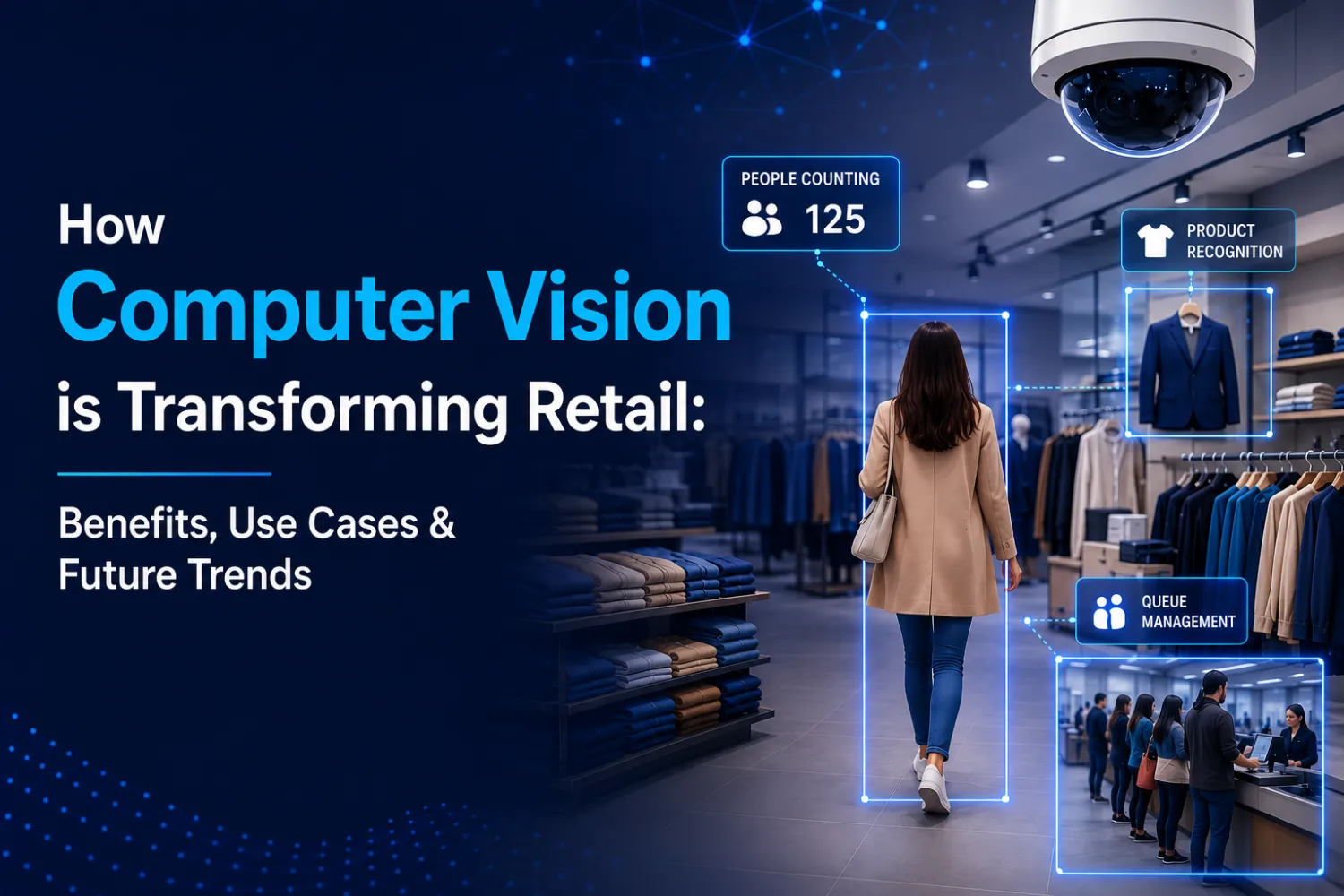
How Computer Vision is Transforming the Retail Industry
The retail industry is undergoing a massive digital transformation, and one of the most impactful technologies driving this change is Computer Vision. From automated checkout systems and smart shelves to inventory management and customer behavior analysis, computer vision is helping retailers improve efficiency, reduce losses, and deliver exceptional shopping experiences.
Powered by Artificial Intelligence (AI) and Machine Learning (ML), computer vision enables computers to interpret and analyze visual information from images, videos, and surveillance cameras in real time. Retailers are leveraging this technology to automate operations, optimize inventory, strengthen security, and personalize customer interactions.
In this blog, we'll explore what computer vision is, how it works in retail, its key benefits, real-world applications, implementation challenges, and how True Value Infosoft helps businesses build intelligent retail solutions.
What is Computer Vision?
Computer Vision is a branch of Artificial Intelligence that enables machines to identify, analyze, and understand visual information from digital images and videos.
Using technologies like Deep Learning, Machine Learning, and image recognition, computer vision systems can detect objects, recognize faces, identify products, monitor customer movement, and make intelligent decisions without human intervention.
In retail, this technology helps businesses automate routine operations while improving accuracy and customer satisfaction.
Why Retail Businesses are Investing in Computer Vision
Today's customers expect faster service, personalized shopping experiences, and seamless checkout processes.
Computer vision helps retailers:
- Improve inventory accuracy
- Reduce product theft
- Automate checkout
- Monitor store operations
- Analyze customer behavior
- Enhance customer experiences
- Optimize workforce productivity
- Improve decision-making using real-time insights
As competition grows, retailers are increasingly adopting computer vision to gain a competitive advantage.
How Computer Vision Works in Retail
A typical computer vision system follows these steps:
- Cameras capture images or videos.
- AI models process the visual data.
- Objects, products, or people are identified.
- Machine learning algorithms analyze patterns.
- The system generates actionable insights.
- Automated actions or alerts are triggered.
This process happens within seconds, enabling real-time monitoring and intelligent automation.
Top Computer Vision Use Cases in Retail
1. Automated Checkout Systems
Computer vision enables cashier-less shopping experiences by automatically identifying products customers pick up and calculating the total bill.
Benefits include:
- Faster checkout
- Reduced waiting time
- Better customer satisfaction
- Lower operational costs
2. Smart Inventory Management
Retailers often struggle with inventory inaccuracies.
Computer vision helps by:
- Detecting out-of-stock products
- Monitoring shelf availability
- Tracking inventory levels
- Preventing inventory shrinkage
- Improving stock accuracy
3. Customer Behavior Analysis
Retailers use computer vision to understand how customers interact with products.
Businesses can analyze:
- Customer movement
- Shopping patterns
- Popular store sections
- Product engagement
- Purchase behavior
These insights help improve store layouts and marketing strategies.
4. Loss Prevention & Theft Detection
Retail theft causes billions in losses every year.
Computer vision helps identify:
- Suspicious activities
- Unauthorized access
- Shoplifting incidents
- Abandoned objects
- Security risks
This improves store security while reducing financial losses.
5. Shelf Monitoring
AI-powered cameras continuously monitor shelves to detect:
- Empty shelves
- Incorrect product placement
- Pricing errors
- Missing products
This ensures products remain available for customers.
6. Facial Recognition for Personalized Experiences
With appropriate legal compliance and customer consent, retailers can use facial recognition to:
- Identify loyalty members
- Personalize offers
- Improve customer service
- Enhance VIP experiences
7. Queue Management
Computer vision analyzes customer queues in real time.
Retailers can:
- Open new billing counters
- Reduce waiting times
- Improve customer flow
- Increase operational efficiency
8. Quality Inspection
Retail businesses use computer vision to inspect products for:
- Packaging defects
- Damaged goods
- Label verification
- Product quality
This reduces returns and improves customer satisfaction.
Benefits of Computer Vision in Retail
Improved Operational Efficiency
Automation reduces manual work and speeds up business operations.
Better Inventory Accuracy
Real-time monitoring helps retailers maintain accurate inventory.
Enhanced Customer Experience
Faster service and personalized shopping create better customer satisfaction.
Reduced Operational Costs
Automation minimizes labor-intensive processes and improves productivity.
Improved Security
AI-powered monitoring reduces theft and fraudulent activities.
Data-Driven Decision Making
Retailers gain valuable insights from customer behavior and store performance.
Real-World Examples of Computer Vision in Retail
Several global retailers have successfully adopted computer vision technologies.
Common applications include:
- Cashier-less stores
- Smart shopping carts
- Automated inventory monitoring
- AI-powered surveillance
- Customer analytics
- Smart shelf management
These innovations are reshaping modern retail.
Challenges of Implementing Computer Vision
Although computer vision offers significant advantages, retailers should address several challenges.
High Initial Investment
Hardware, cameras, AI software, and infrastructure require upfront investment.
Data Privacy
Businesses must ensure customer data is collected, stored, and processed securely while complying with privacy regulations.
Integration with Existing Systems
Computer vision should integrate seamlessly with POS systems, ERP software, and inventory management platforms.
Lighting & Camera Quality
Poor lighting and low-quality camera feeds can reduce model accuracy.
AI Model Training
Computer vision systems require high-quality training data for accurate product detection and recognition.
Future of Computer Vision in Retail
Computer vision is evolving rapidly alongside Artificial Intelligence and Generative AI.
Future innovations include:
- Autonomous retail stores
- AI-powered shopping assistants
- Smart warehouses
- Predictive inventory management
- Personalized in-store experiences
- Robotics-assisted retail operations
- AI Agents for retail automation
Businesses adopting these technologies today will be better positioned for the future of retail.
How True Value Infosoft Helps Retail Businesses
At True Value Infosoft, we develop AI-powered retail solutions that improve operational efficiency, automate workflows, and deliver smarter customer experiences.
Our expertise includes:
- Computer Vision Development
- Artificial Intelligence Solutions
- Machine Learning Development
- AI-Powered Retail Automation
- Inventory Management Software
- Retail Mobile App Development
- Custom Software Development
- AI Chatbot Development
- Cloud-Based Retail Solutions
- Business Intelligence & Analytics
Whether you're building a smart retail platform, automating inventory management, or implementing AI-powered customer experiences, our team delivers scalable and secure solutions tailored to your business goals.
Conclusion
Computer Vision is transforming the retail industry by automating operations, improving customer experiences, enhancing security, and enabling data-driven decision-making. From smart inventory management to cashier-less checkout and customer analytics, the technology is helping retailers stay competitive in an increasingly digital marketplace.
As AI continues to evolve, computer vision will become a critical component of the future retail ecosystem. Businesses that invest in intelligent retail technologies today will gain a significant competitive advantage tomorrow.
If you're planning to build AI-powered retail solutions, True Value Infosoft can help you design, develop, and deploy scalable computer vision applications tailored to your business needs.